


Color me confused. In the red corner we have Mazda’s elegant and svelte CX-90 SUV. It comes standard with three rows of pews for versatile, seven-or-eight passenger family hauling.
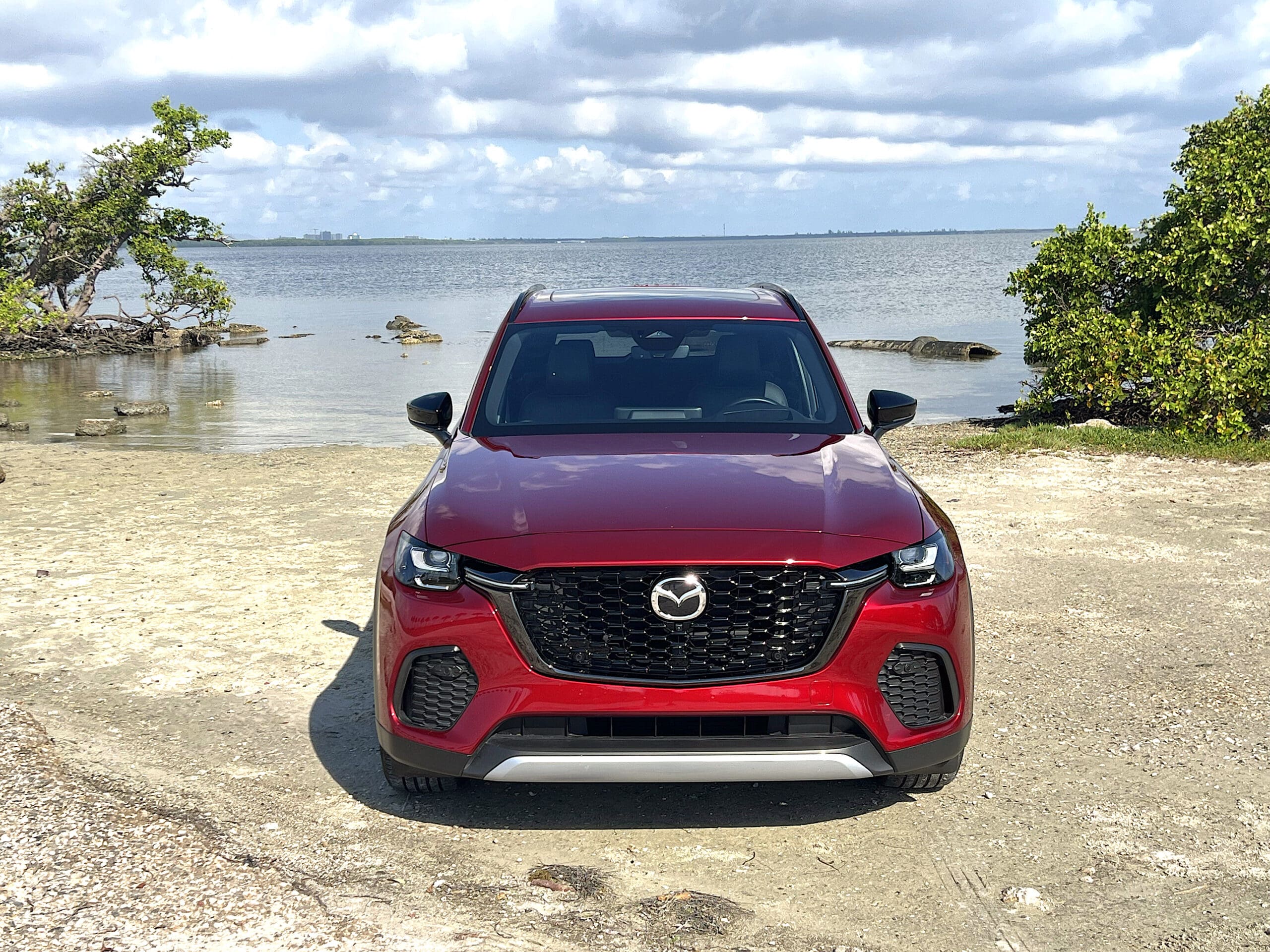
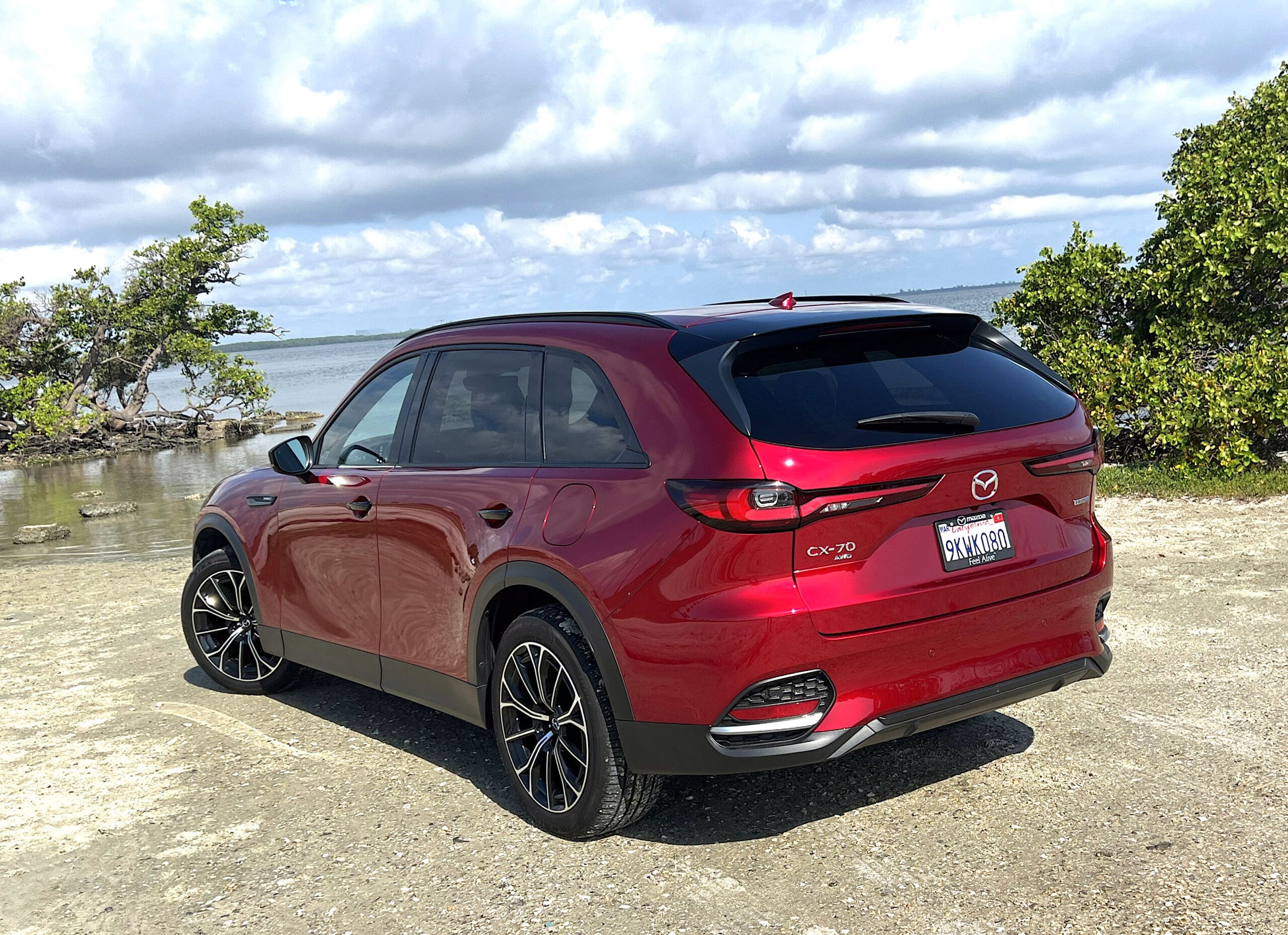
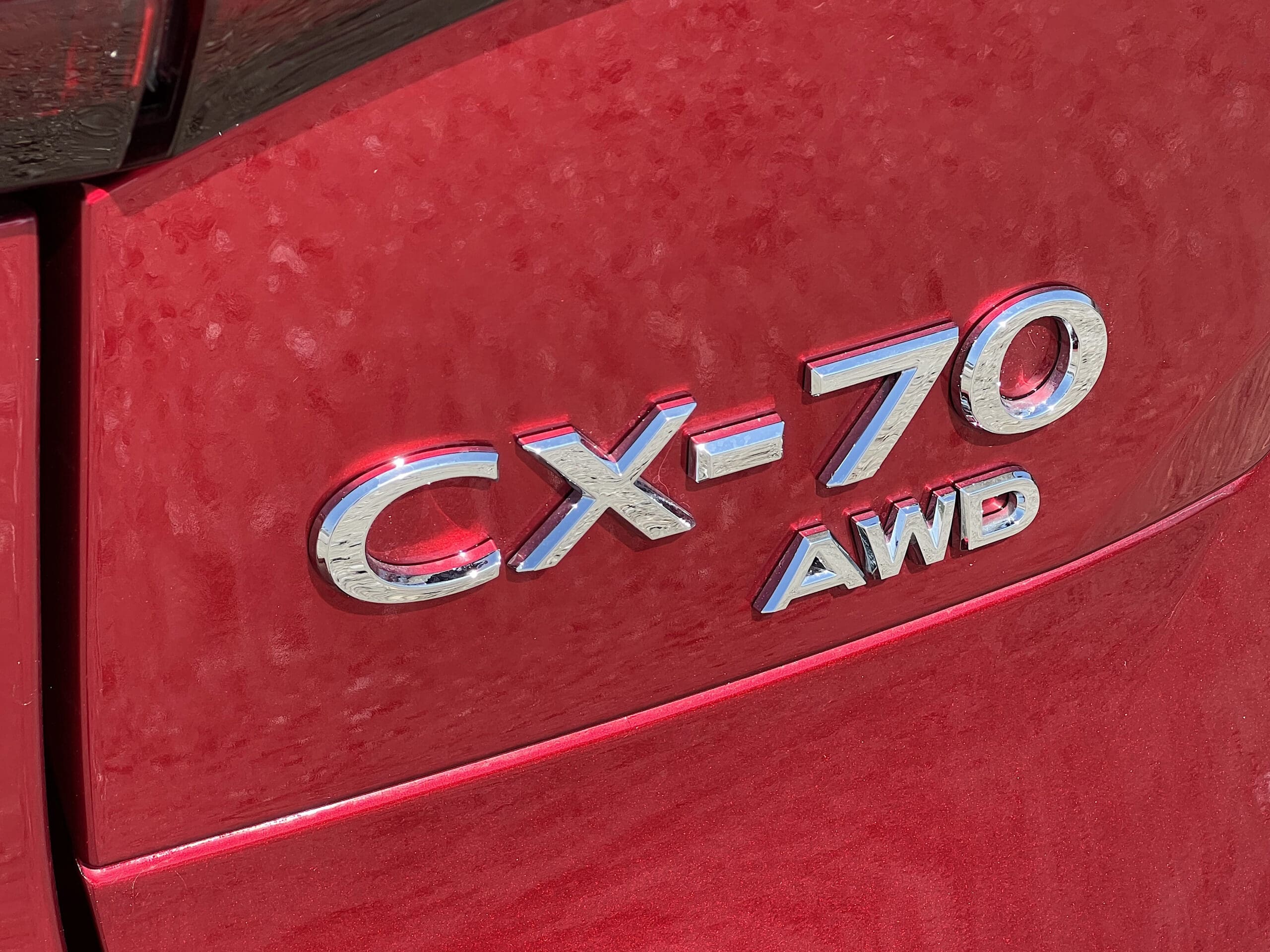
Now over in the green corner, we have Mazda’s brand-new CX-70 that’s pretty much identical in every way to the CX-90. But it offers just two rows, and seats for four or five.

Now you’d be forgiven for thinking, like me, that the CX-70 would be a lot less-expensive than the 90, on account of not having that third row.
Alas, you’d be wrong. The CX-70 line-up kicks off at $40,445 with the Preferred model, which is $2,400 more than where the CX-90 range starts with the Select version.
Even comparing Preferred with Preferred, the CX-90 costs only $500 more.
Makes no sense to me why Mazda wouldn’t have simply offered a CX-90 with or without a third-row instead of creating a new model range.
After all, who wouldn’t want the option of a third row? While legroom isn’t exactly spacious back there, the seat is perfect for a couple of kids, or a couple of adult buddies who don’t mind being scrunched-up for a quick trip to dinner or the beach.
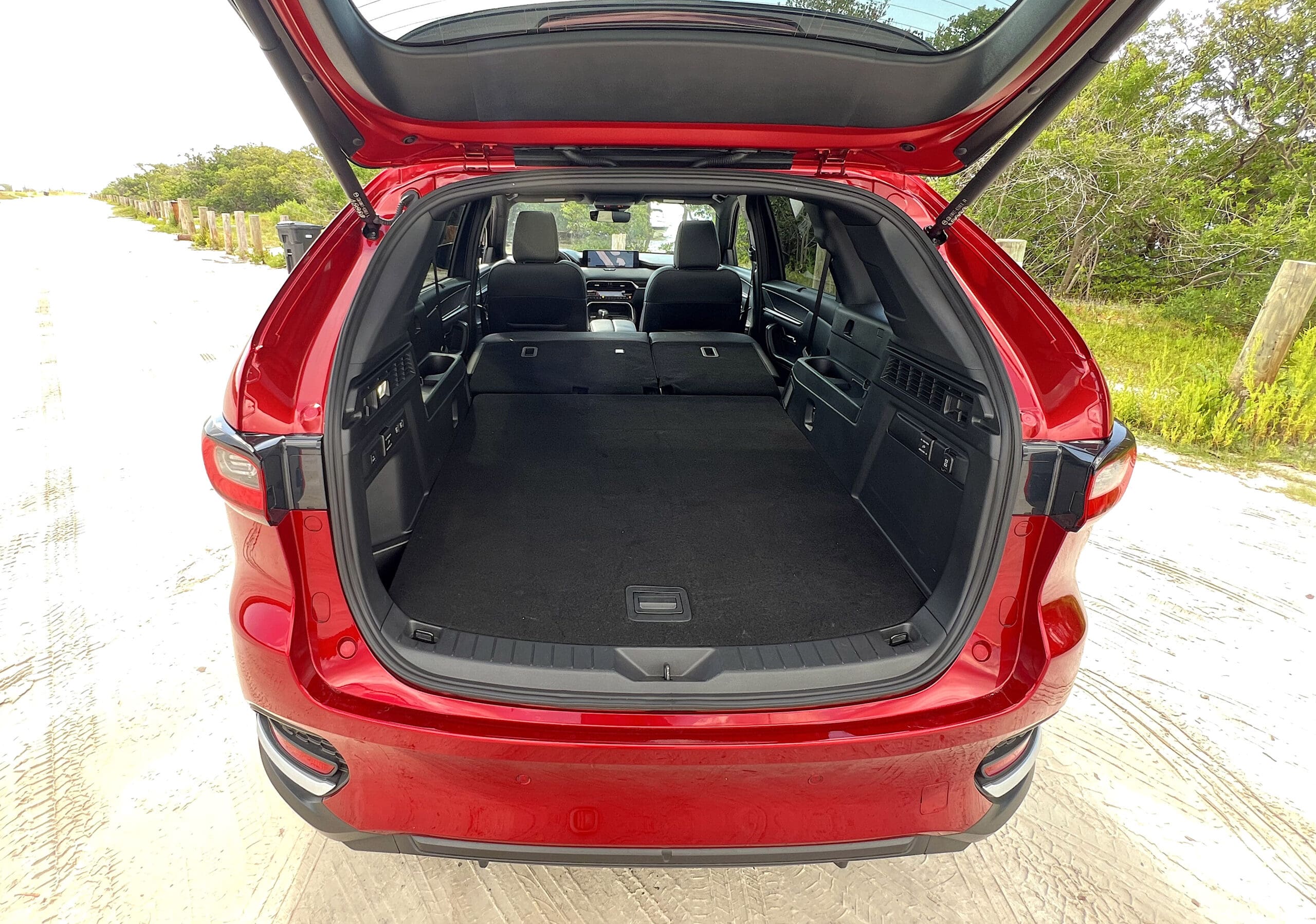
It’s not as if that third row sacrifices any load space either. Both three-row and two-row models offer the very same 75-cubic-feet with rear seats folded.
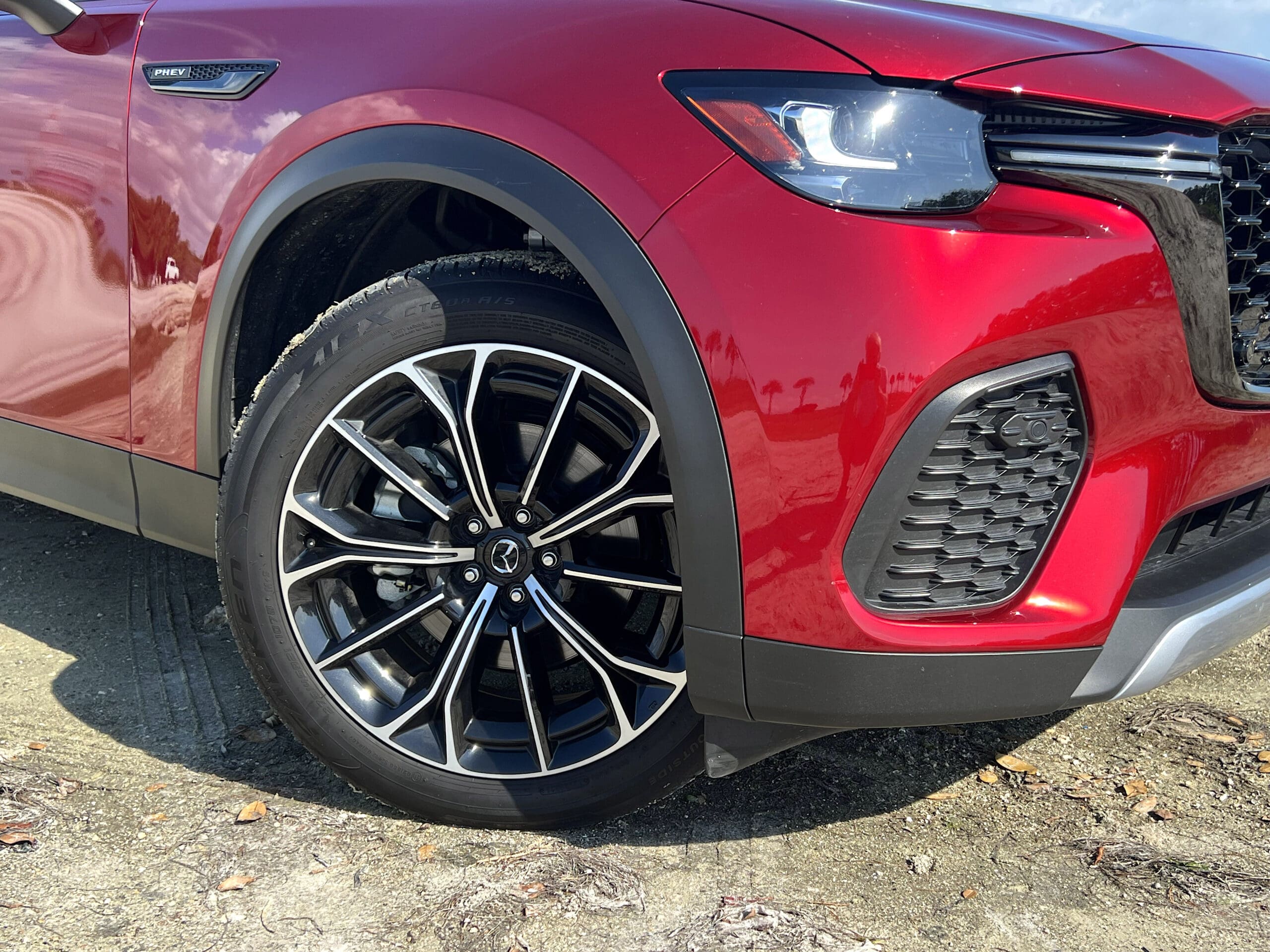
The reason for all this 70-versus-90 comparison is that I’ve just spent a week piloting the new flagship CX-70 Premium Plus PHEV plug-in hybrid, $58,825, or $59,420 as tested.
Just like the equivalent CX-90 hybrid, the 70 pairs a 189-hp 2.5-liter four-cylinder gas engine with a 173-hp electric motor juiced by a 17.8 kWh lithium-ion battery pack. It gives a combined 323 horseys and 369 torques.
Plug it in, and with a full battery, it’ll run for around 26 miles on electric-only power. Perfect for around-town commutes, school runs or retail-therapy expeditions.
And when the juice runs out, the gas motor kicks in, returning 24 mpg city, 27 mpg highway fuel economy, according to the EPA. Find yourself a 240-volt Level 2 outlet, and the 70 can be amped-up from 20 to 80 per cent in about 90 minutes.
Out on the highways and by-ways, the hybrid powertrain works a treat, providing zippy, off-the-line acceleration, with 60 mph coming up from a standstill in just 5.9 seconds.
But that four-cylinder Mazda motor could be smoother. Mash the throttle and as the revs rise, so does the volume and harshness. At wide-open throttle, there are chainsaws that are more refined.
Being a Mazda, even a hefty mid-size SUV like this, there’s still plenty of zoom-zoom. Standard all-wheel drive and a low center of gravity courtesy of the battery pack, makes the CX feel nimble and agile through the curves.
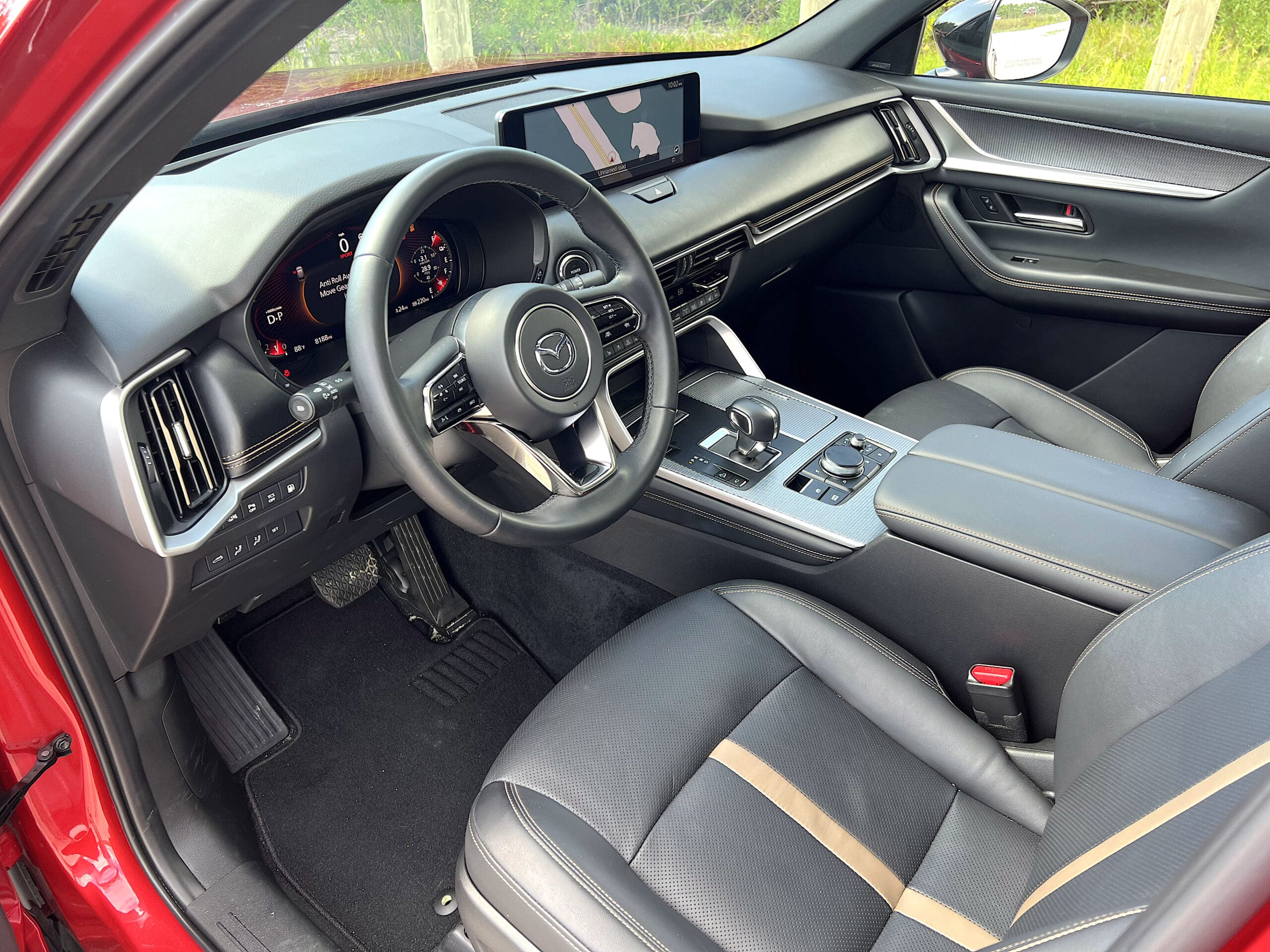
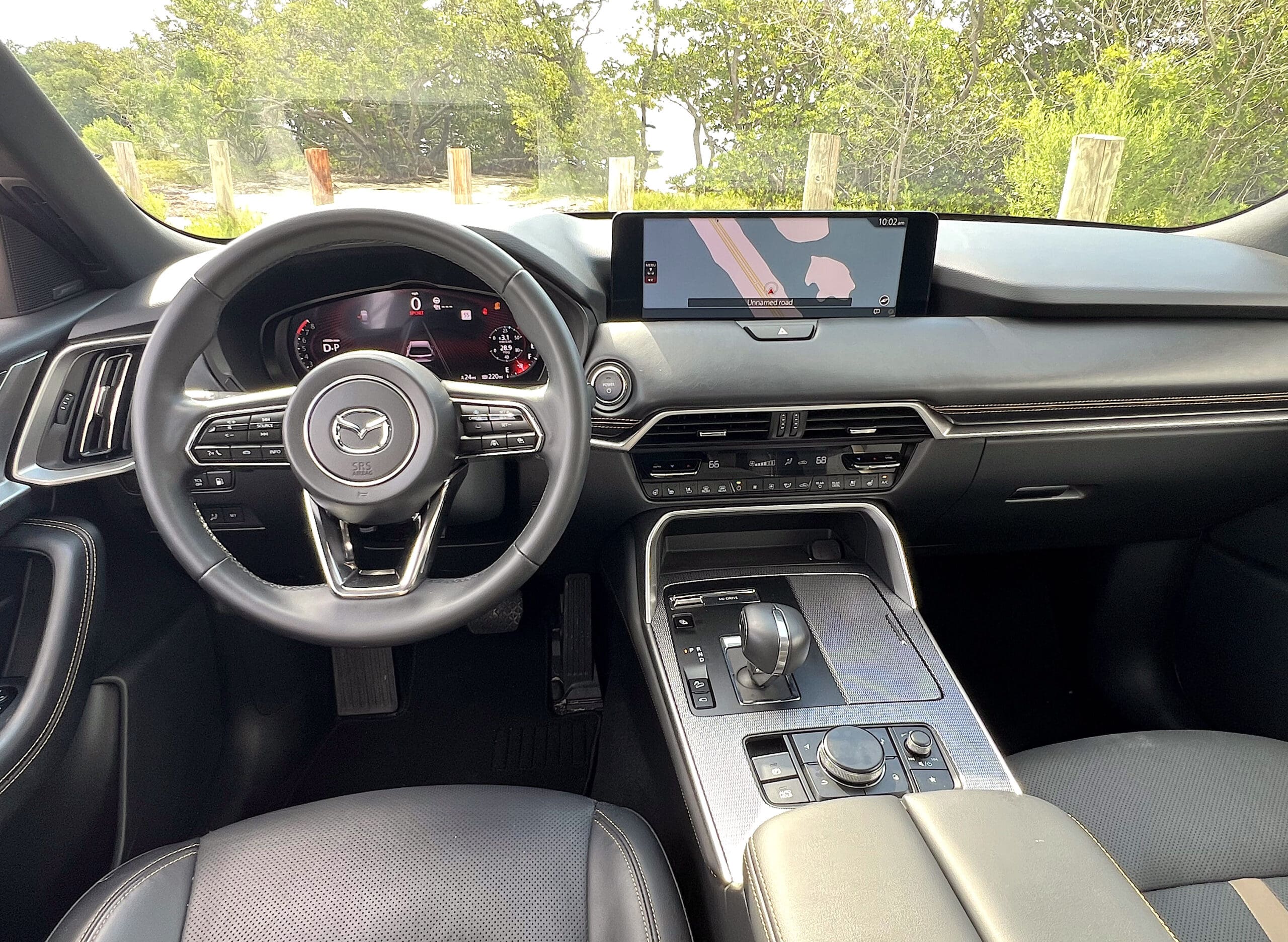
From behind the wheel, this CX-70 is certainly a lovely place to be. Mazda cabins have always seemed a cut-above in terms of design, craftsmanship, quality of materials and fit and finish, and this new 70 is no exception.

The front seats are super-comfy, heated and cooled, and have plenty of adjustment. In the rear, the 60/40-split bench offers stretch-out legroom, with the cabin lit by the near full-length glass roof above.
While build quality is first rate, my only disappointment is with the doors, which close with a cheap, tinny sound. Not what you expect from a $60,000 sport-ute.
But like the CX-90, the 70 looks terrific, with its bold, air-gulping front-end, curvy body and muscular stance on those lovely-looking 21-inch rims. And no one does metallic red paint like Mazda.
In the end, it’s hard to justify this two-row CX-70 over the three-row CX-90. No doubt it was a Mazda marketing decision aimed at expanding its model portfolio.
Or maybe I’m just missing something.