

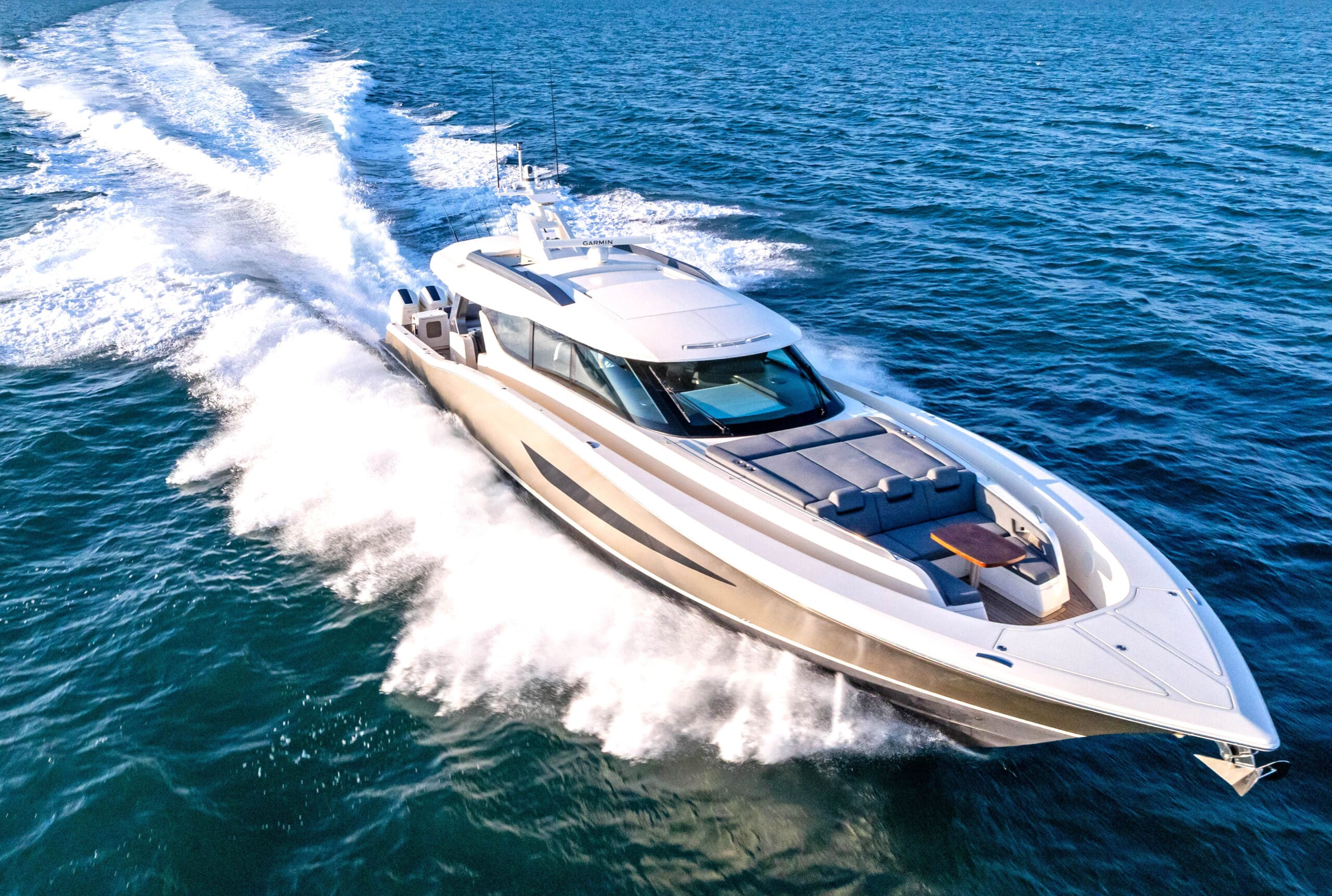
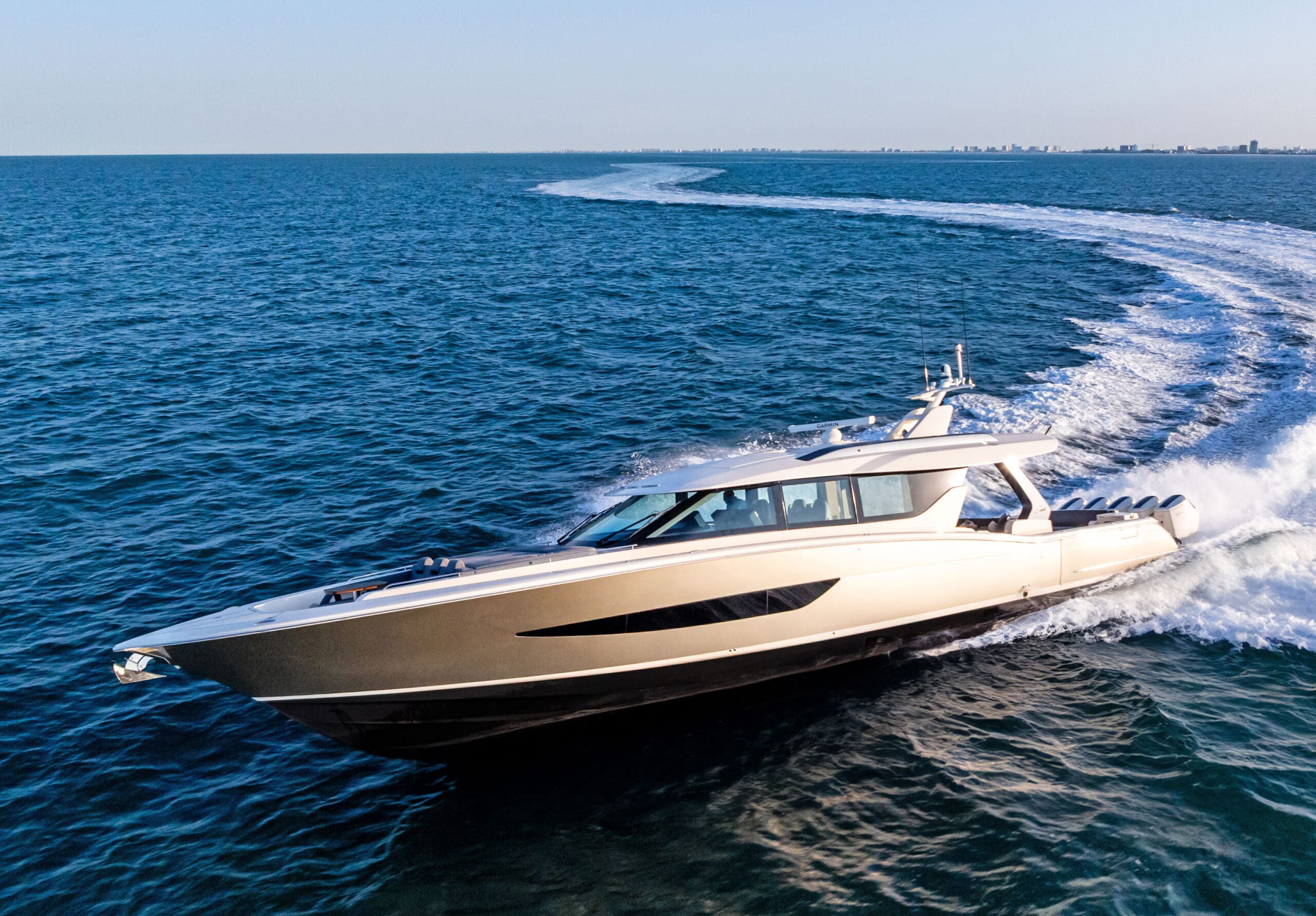
We’re rocketing. Thirty, 40, 50 miles an hour, that towering bow slicing through waves like a box-cutter through packing tape.
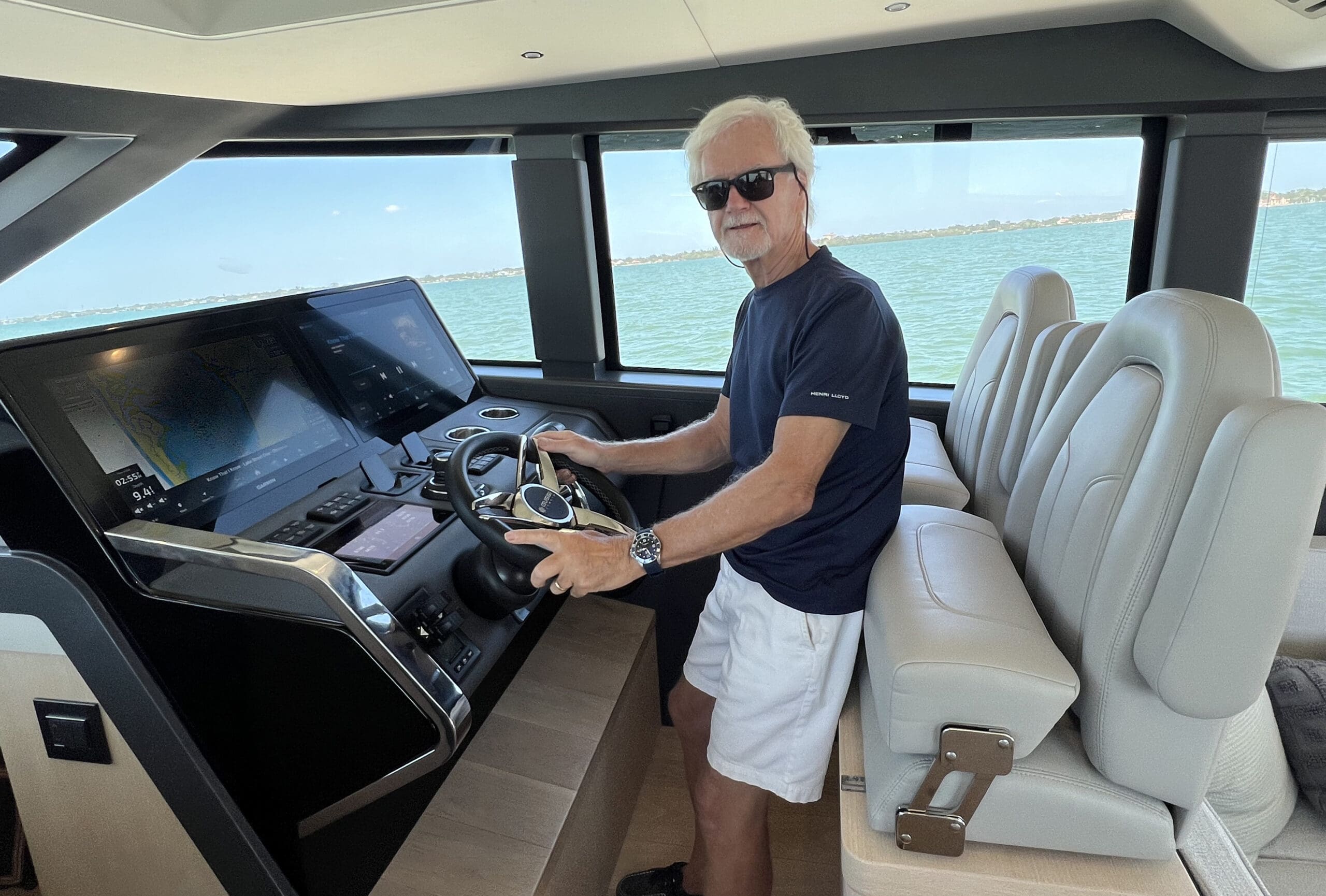
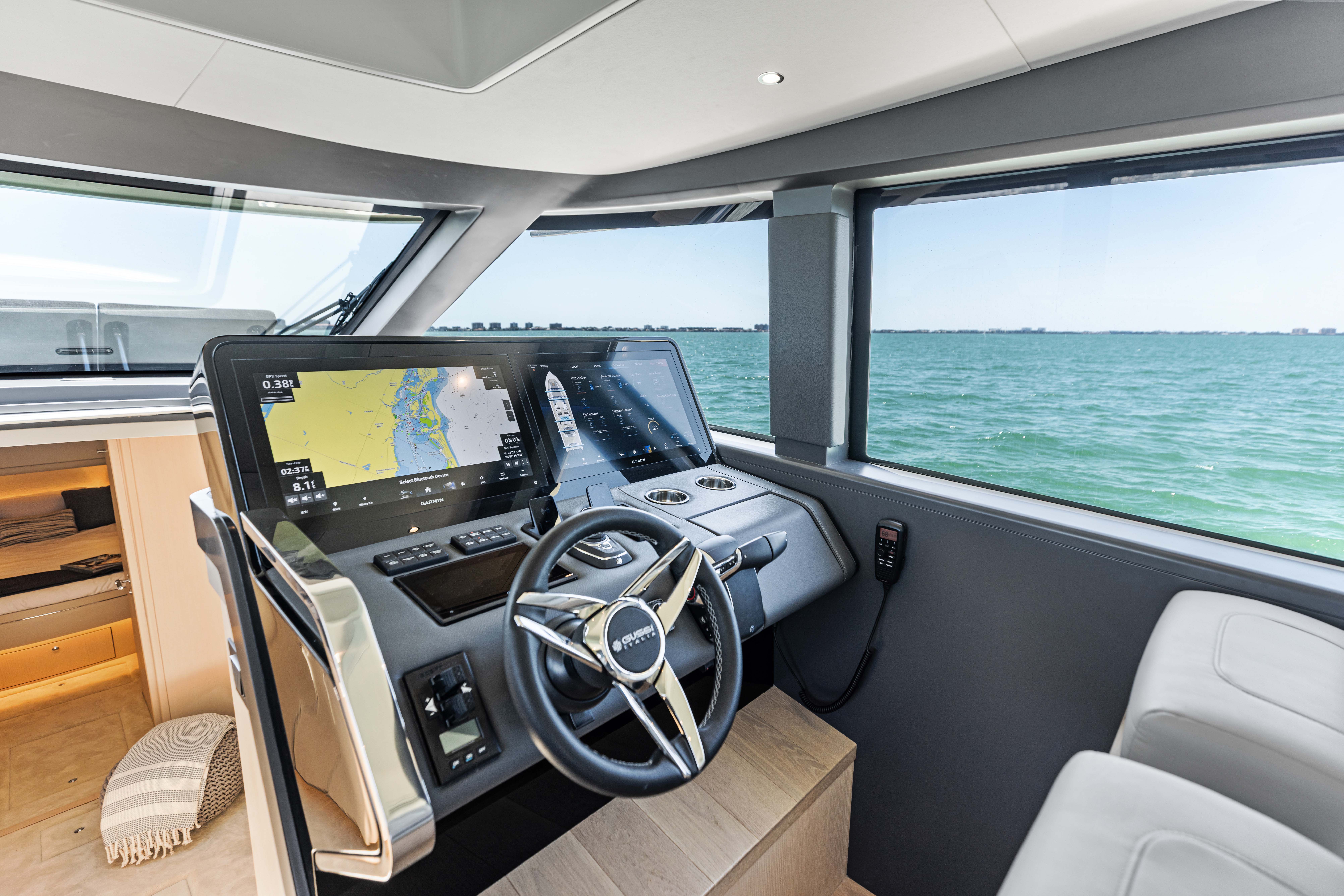
And then there it is, a big 6-0 flashing-up on the Garmin screen. Sixty miles an hour flat out is an astonishing velocity for any 67-foot, 60,000-pound, high-luxury express cruiser, even one with 3,000 horsepower on tap.
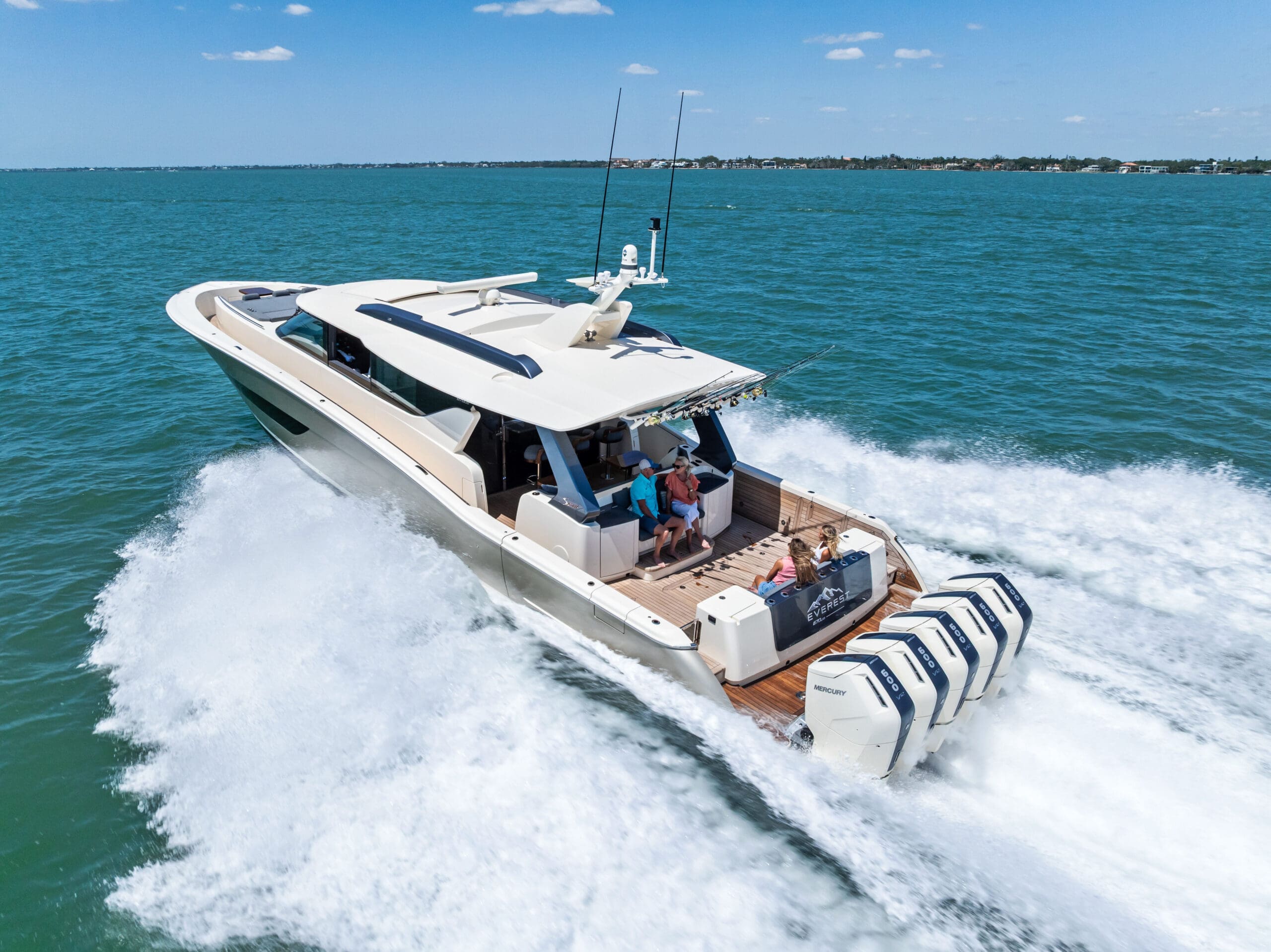
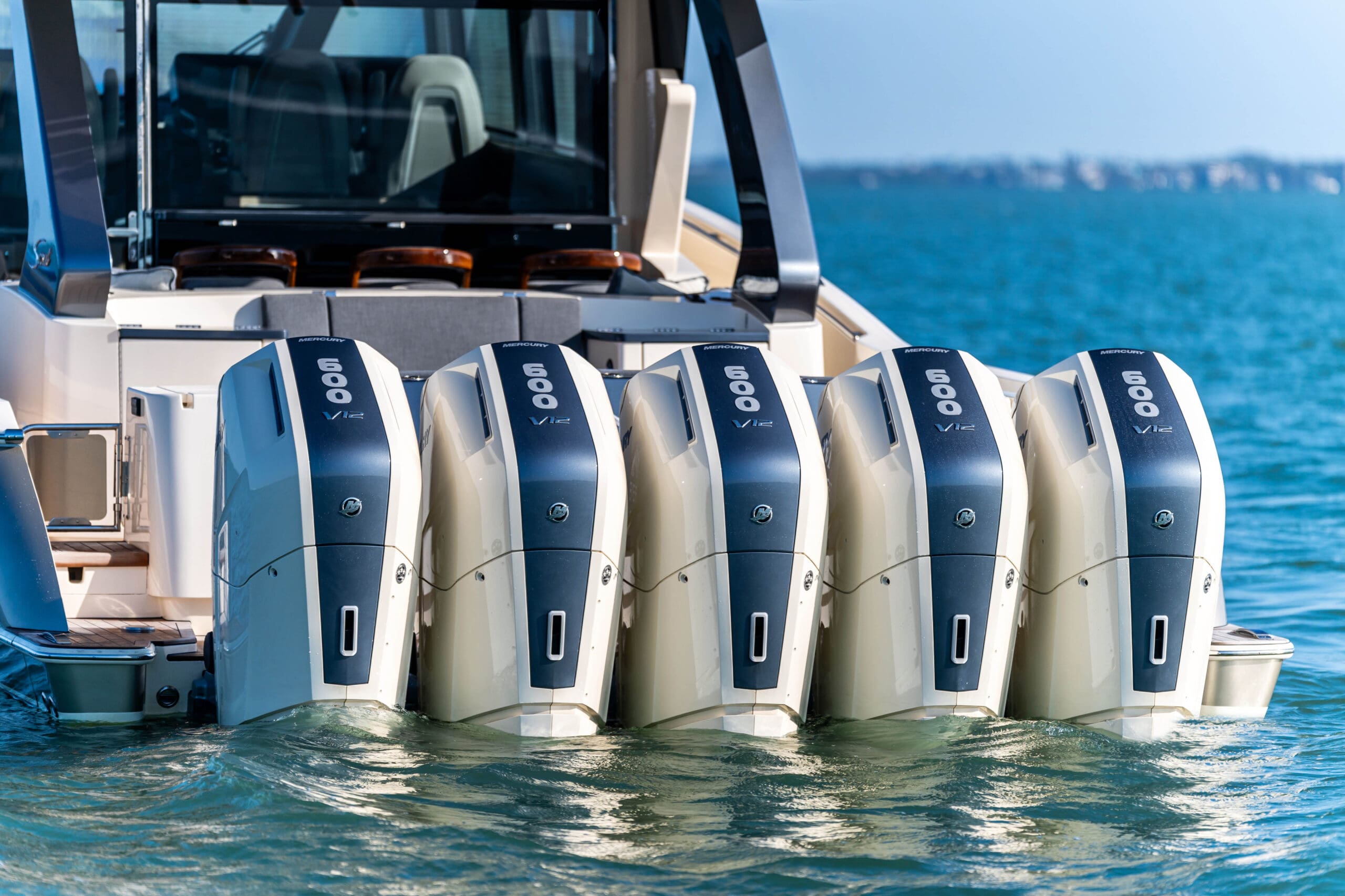
Those 3,000 horses, however, are delivered not from a pair of muscley diesels or big-block V8s, but from a quintet of 600 hp Mercury Verado V12s outboards. Yes, outboards, on a 67-footer.
Which makes this brand new, South Carolina-built Scout 670 LXS I’m piloting, the world’s largest outboard-powered boat on the planet.
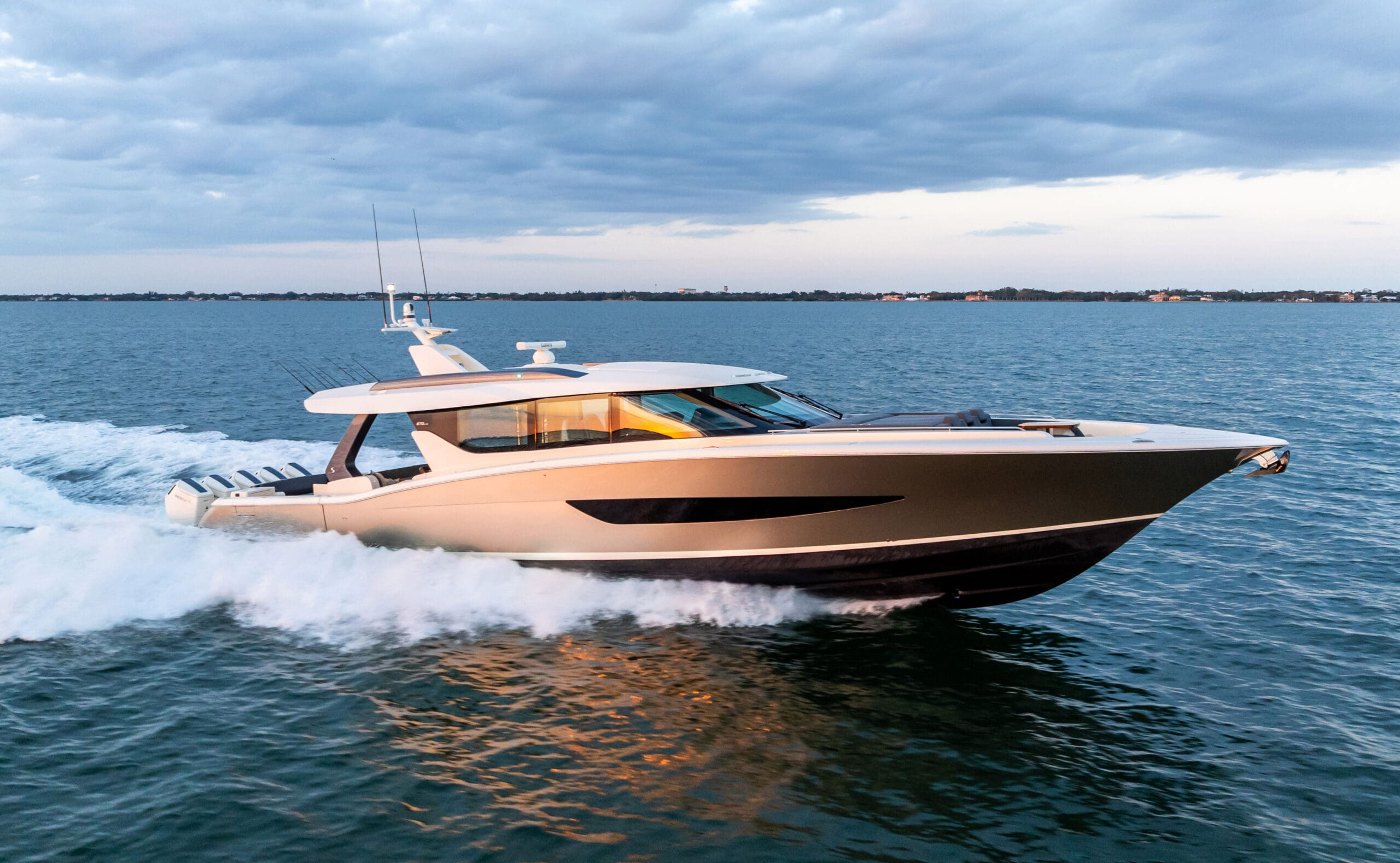
It’s arguably one of the most stunning too. See it tethered stern-to at Sarasota’s Marina Jack, it looks slim and slender, lean and mean. And a mile long.
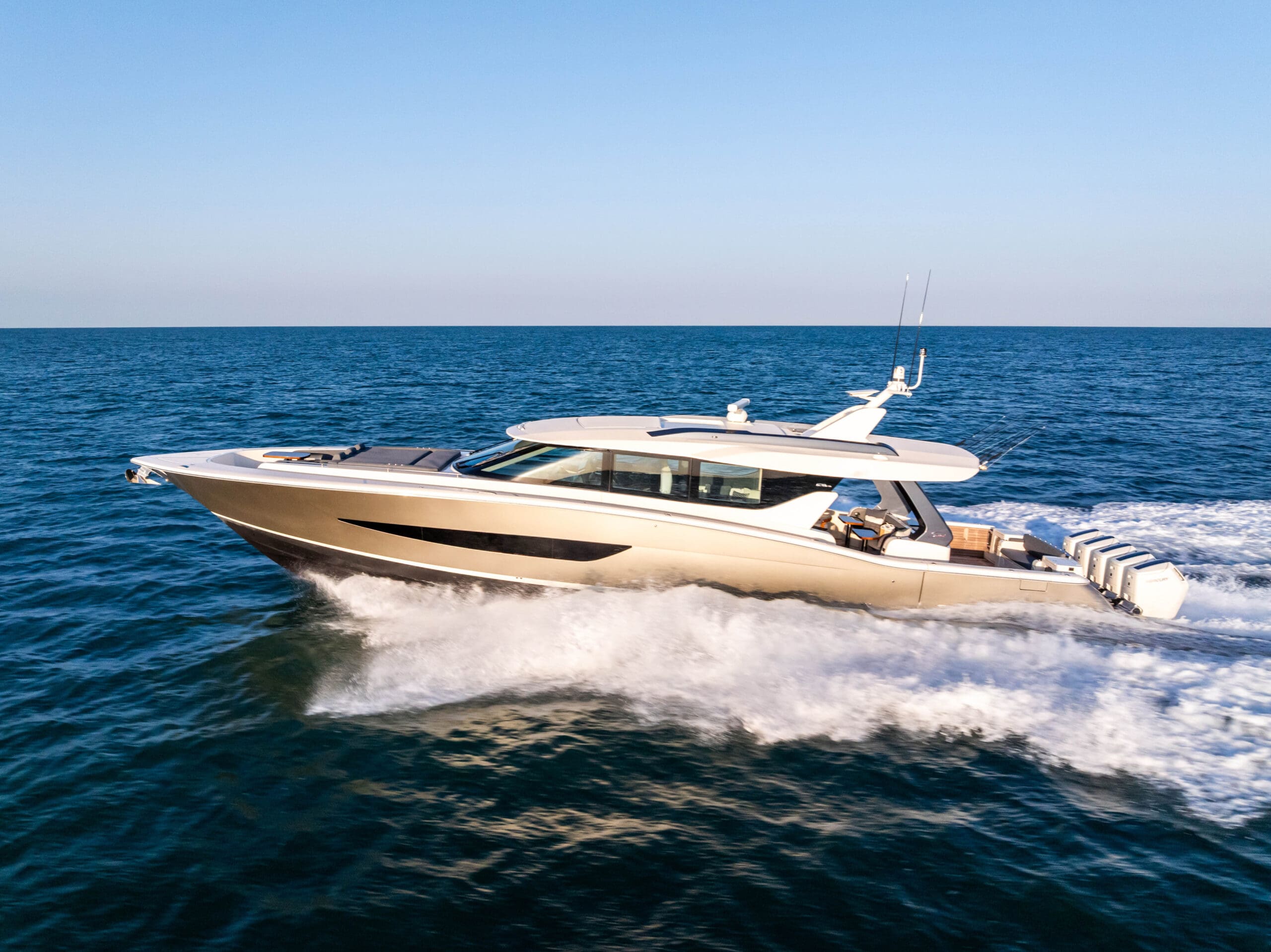
Yes, it has the trademark flared bow and swooping profile of Scout’s 530 model. But that swept-back windshield, shallow side windows and endless hardtop give it a sleek, super-low-profile stance.
Step aboard and the teak-decked cockpit shows that it’s perfect for entertaining a crowd, or some serious deep-sea fishing. To pull-in that grouper, or for the kids to do swan dives, there are power-descending terraces on each side that stretch the beam from 16 feet to almost 20.
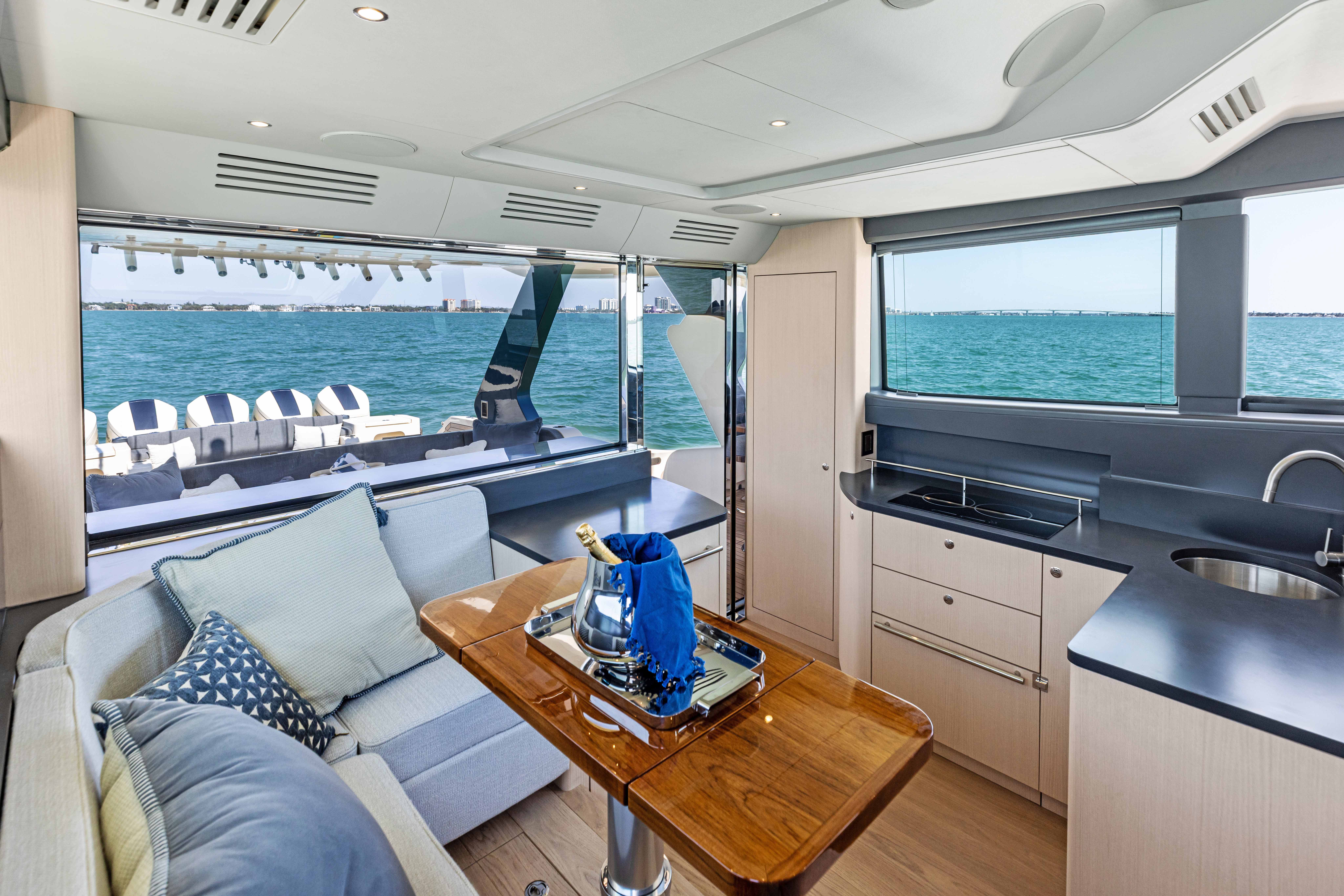
But perhaps my favorite spot on the boat, apart from the helm, is the covered dining/entertaining area just north of the cockpit. It’s shaded and feels cosy and protected by the substantial hardtop supports. It’s air conditioned too.
That and the fun forward bow lounge reached by impressively wide and deep walkways. Here there’s a huge sun pad with tilt-up backrests and U-shaped sofa with seating for six. Just the perfect place for sunset cocktails.
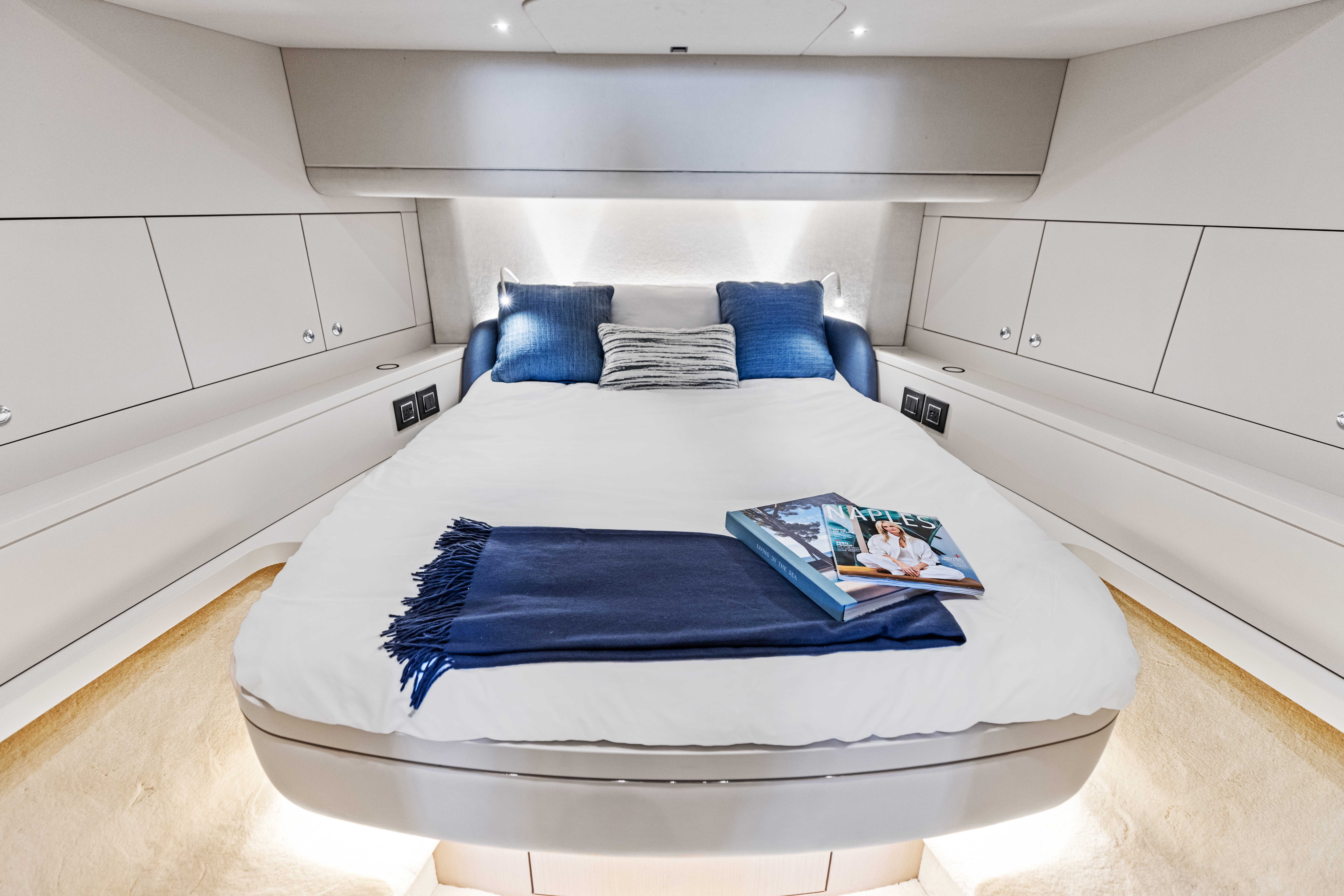
Below decks, the 670 offers roomy accommodations in three cabins. There’s an ensuite master in the bow, a guest double on one side and a twin-bed cabin on the other.
They’re separated by a lounge area with sofa, TV and small galley. My guess is that few owners will bother to spend the night aboard, but use the space for naps, movie watching, showers and cooling-off in the air-conditioned comfort.
Time to see what she can do. Casey Collias, Scout’s top demo captain is on hand to show me the ropes. And right now the ropes are being released for our afternoon of burning gas around the disappointingly calm waters of Sarasota Bay.

Maneuvering out the dock is a breeze courtesy of a powerful bow thruster, stern thruster and joystick control for the five Verados. A tap of a button also engages the Skyhook digital ‘anchor ‘ that uses GPS to keep the boat in place while Casey pulls in fenders. Single-handing the Scout wouldn’t be a problem.
Out into the bay, hard on the throttles, and the 670 rises effortlessly up on to the plane like a Gulfstream on take-off. Then we’re off, hitting 50 knots, or 57 mph, in less than a minute.
What’s absolutely remarkable here is the utter lack of noise. Those Verado V12s are renowned for their stealthy silence, but in the Scout it’s otherworldly.
Now comes the wild part. Spin the wheel hard over at the aforementioned 57 mph – crazy I know – and the 670 just leans, bites hard, and corners just like a Porsche. And slamming into its own three-foot wake is a non-event.
While the quartet of Verado outboards deliver truly impressive performance, the other party trick comes when you reach your favorite sandbar. Tilt up the motors and the Scout can glide through water just over three-feet deep and park its nose right up on the sand. That couldn’t happen with shaft drives or IPS pods.
With all these positives, there has to be a negative, right? For me it’s price. A base 670 LXS will set you back a cool $6.85 million, with our test boat coming in at $7.51 million. The upcoming flybridge version will no doubt cost more.
Yes, it reflects the state-of-the-art construction, the comprehensive specification and soaring level of craftsmanship. But it’s still a big number.
Yet when that digital speedo shows 60 mph and you’re heading to Bimini for lunch, it all makes sense.