


Hip To Be Square: 2026 Subaru Outback Premium
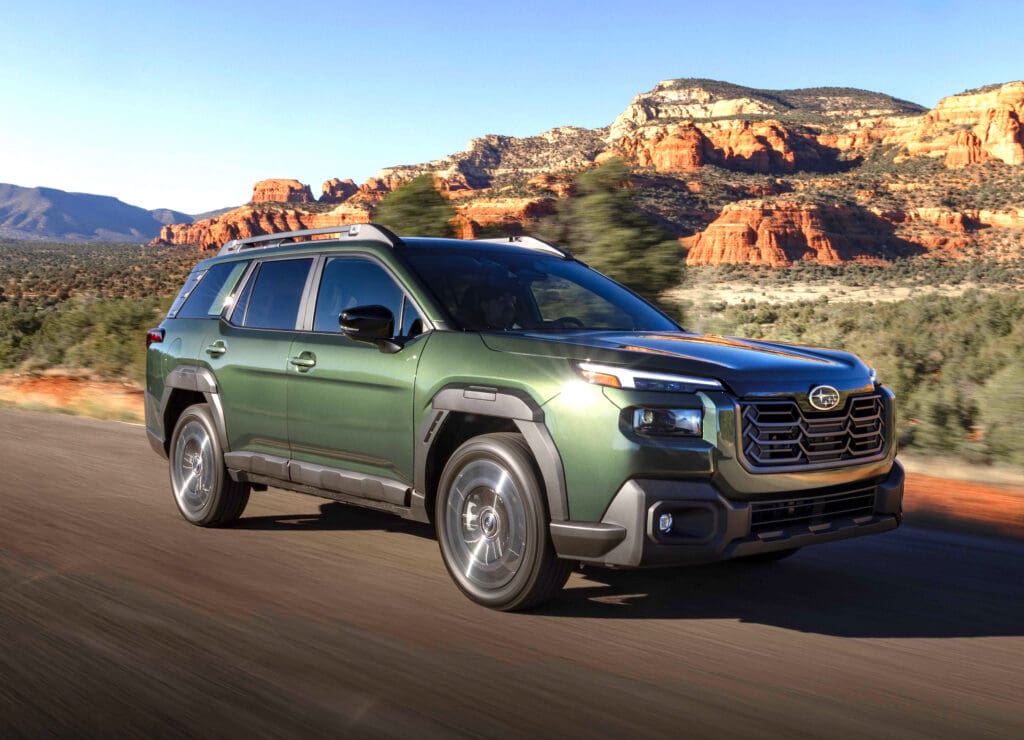
If you thought an Outback is where you go for Bloomin’ Onions and shrimp off the barbie, think again. Outback is Subaru’s third best-selling model which, for 2026, has just had the kind of makeover Fixer Upper’s Chip and Joanna could only dream about. In place of the last-gen’s low-roof, station-wagon-style body, this all-new version has gone full SUV, boasting blunt, square-edged lines that look a little like the box it came in. Styling is obviously in the eye of the beholder. But I miss the sleeker lines of the last Outback. To me, this new version looks too much like the less-expensive Forester. Of course, boxy styling means more practicality, with a useful boost in interior space. And talking of interior, this re-design has given the new Outback’s cabin a much fresher look, with a step-up in quality of materials and infotainment tech. Shape-wise, you’re looking at a taller, more upright front end with, to me, an ugly, black plastic grille and lower bumper. No design prizes either for the mish-mash of equally-ugly, black plastic wheel arches and lower door guards. It looks for all the world like some Chinese stick-on body kit you order off Temu for $39.99. But I guess if you want buyers to think of your new Outback as a rugged, go-anywhere, climb-every-mountain 4×4, you slather it with as much dent-resisting black plastic as you can. Six new flavors of Outback are on offer for 2026, kicking off with the base Premium from $36,455 that I’ve just spent a week piloting. Step up to the Limited ($43,165) or Limited XT ($45,815) or the Touring ($46,845) or flagship Limited XT at $49,445. For true offroad fans, there’s a jacked-up Wilderness version starting at $46,445. In general, Outback prices have jumped by up to $5,000 compared to 2025, which is likely down to a mix of Subaru’s decision to move production from Indiana to Japan and those wonderful tariffs. Under the curvy hood, you’ll find the same 2.5-liter “boxer” four-cylinder and CVT automatic as before. For our base Premium version, it summons-up a so-so 180-hp and 178 lb-ft of torque. A big reason for opting for the XT or Wilderness versions is that they come with turbocharged version of the 2.5 that’s good for a more-like-it 260 horseys and 277 torques. For me, one of the biggest disappointments with this new Outback is the lack of a hybrid option. The truly lovely Forester Hybrid I drove last year felt quick off the mark, super-refined and could average 35 to the gallon around town – compared to 25 mpg for the Outback. Out on the road, our Outback Premium tester felt underwhelming at best. Zero to 60 in 8.8 seconds reflects the sluggish performance, while foot-to-the-floor results in the standard CVT continuously-variable transmission sounding like an Evinrude outboard on wide-open throttle. No prizes either for the rather numb, lifeless steering which now features a supposedly more-precise, dual-pinion steering rack from Subaru’s zippy WRX sports sedan. But this new Outback isn’t a sports SUV. The appeal here is loading it up with kayaks on the roof, camping gear in the back, and heading off along a gravel forest road to a remote trailhead. Here the car’s famous symmetrical all-wheel drive set-up, grippy 18-inch all-season tires and 8.7 inches of ground clearance will keep it going along those roads less traveled. And inside, there’s space for a mountain of gear, courtesy of that square-box style which increases headroom by a couple of inches and adds two additional cubic feet of storage – now an impressive 80.5 cubic feet. People space is also generous with plenty of headroom and kneeroom in the back, along with a reclining rear seatback. Nice, supportive front seats too, trimmed in Subaru’s smart, wipe-clean StarTex pleather. Stick to the base Premium model and this 2026 Outback is a bloomin’ good value at around $36,500, though the more powerful and better-equipped Limited XT at around $10,000 more would be hard to resist. Either one would be perfect for a trip to your local Outback.
Incredible Hulk: 2026 Nissan Armada NISMO
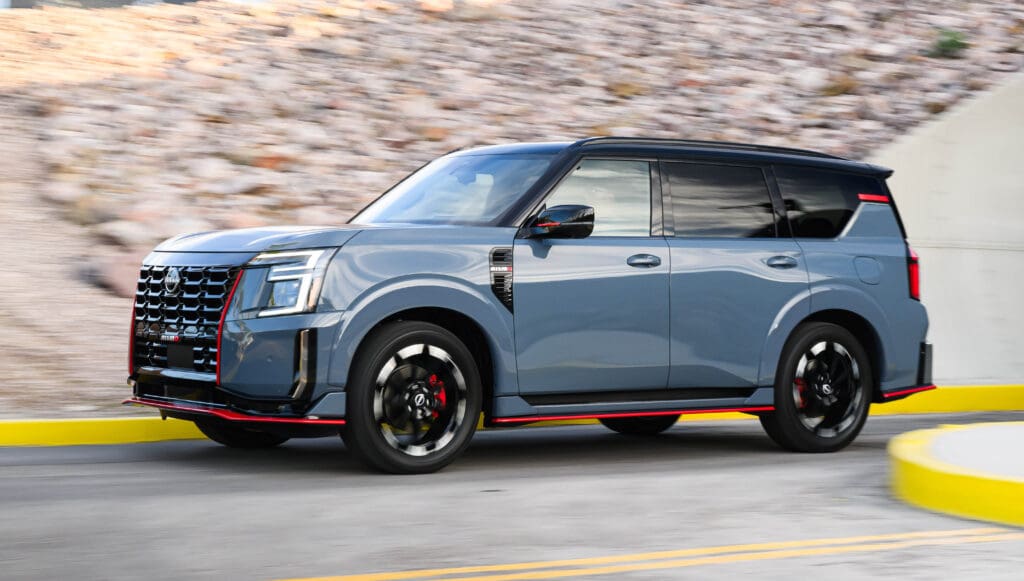
Shaq in the check-out line at Sprouts will turn heads. Guaranteed. So will a rampaging Texas Longhorn in a Pottery Barn. But nothing will rotate noggins like an XXL-sized Nissan Armada NISMO SUV rolling through Tampa’s Old Hyde Park Village on a sunny Saturday afternoon. Jaws drop, fingers point, kids go wide-eyed, and it seems the army of shoppers exhale a collective “wow”. Here’s the Tonka Toy of SUVs that’s so over-the-top, so visually crazy, it could have come out of the workshops of Overhaulin’, Bitchin’ Rides or Monster Garage. Based on Nissan’s flagship Armada three-row 4×4, this is the latest creation from the auto maker’s NISMO – short for Nissan Motorsport – tuning division. Just look at the thing. That bluff, towering front end could have been modeled after a Peterbilt’s. The fire-truck-red stripe all around the base looks like a ring of disco neon. Those bulging fenders and towering 22-inch rims wouldn’t look out of place on Ricky Bobby’s NASCAR racer. No, this 2026 Armada NISMO won’t be for everyone, especially with its $81,720 sticker price. But if your budget doesn’t stretch to a $155,000 Mercedes G 550 or Cadillac’s $168,000 Escalade-V, then it’s a terrific, well-priced alternative. And it’s a whole, big bundle of driving fun with plenty of substance to balance out all that in-your-face style. Under that Texas-sized hood, the standard Armada’s twin-turbo 3.5-liter V6 gets an extra 35 horseys to take the tally up to a stampeding 460 hp along with a stump-pulling 516 lb-ft of torque. Hook a UHaul to the tow hitch, or maybe your weekend Nissan Z NISMO racecar, and it won’t break a sweat hauling up to 8,500 pounds. And when red light turns to green, the big Nissan can scoot off the line and rush to 60 mph in an impressive six seconds. The NISMO tuning wizards also gave the nine-speed automatic quicker reaction times, tuned the electric power steering for quicker responses, while stiffening the adaptive air suspension for less body roll and a (slightly) sportier feel. While those NISMO-exclusive 22-inch rims may look pretty, they’re made of lightweight forged alloy and are wrapped in sticky Bridgestone Alenza Sport all-season tires. No, simple physics mean this 6,100-pound honker isn’t going to instantly morph into a Z NISMO two-seater through the curves. But if you accept the limitations, it’s a suprisingly fun-to-drive porker that feels confident, planted and surprisingly playful. Thankfully, NISMO hasn’t firmed-up the air suspension enough to ruin the ride quality. Even over lumps, bumps and deepish potholes, the Armada never jiggles or jolts, and always feels composed. Talking of playful, NISMO added a modified exhaust system with a soundtrack modeled after the Z sportscar’s that’s piped through the Armada’s 600-watt, 12-speaker Klipsch sound system. Fake, I know, but still fun. The playfulness continues when you climb-up into the NISMO-tweaked cabin. If you love red, then this is the place for you, with searing red suede inserts for all three rows of seats, rings of red piping around the dash, and even racy-red seat belts. There’s also a NISMO exclusive steering wheel with its salami-thick rim, contoured hand grips, red stitching and a subtle red marker at the 12 o’clock position, just like they have on race cars. Those big, armchair-like front seats have also been NISMO’d with extra side bolstering to keep you in place on curves. In front of you, the 14.3-inch instrument display and 14.3-inch center touchscreen get a few NISMO-specific graphics. In red, naturally. And throughout the cabin, Nissan won’t let you forget what you’re driving with the multitude of NISMO badges, on the dash, wheel, seat headrests and floormats. Overkill? You bet. As with the standard Armada, the cabin is huge, with those three rows of seats to carry up to seven in real stretch-out comfort. The second-row captain’s chairs are La-Z-Boy relaxing. It’s funny, I initially wanted to hate this gaudy, brutish, over-the-top XXL-sized SUV. But after a week of driving, I was truly sad to see it go. Somehow it manages to feel fun and playful, rather than bold and aggressive, with just enough added substance to justify the NISMO badging. Maybe I just liked all the attention.
Good RX: 2026 Lexus RX 500h F Sport Performance
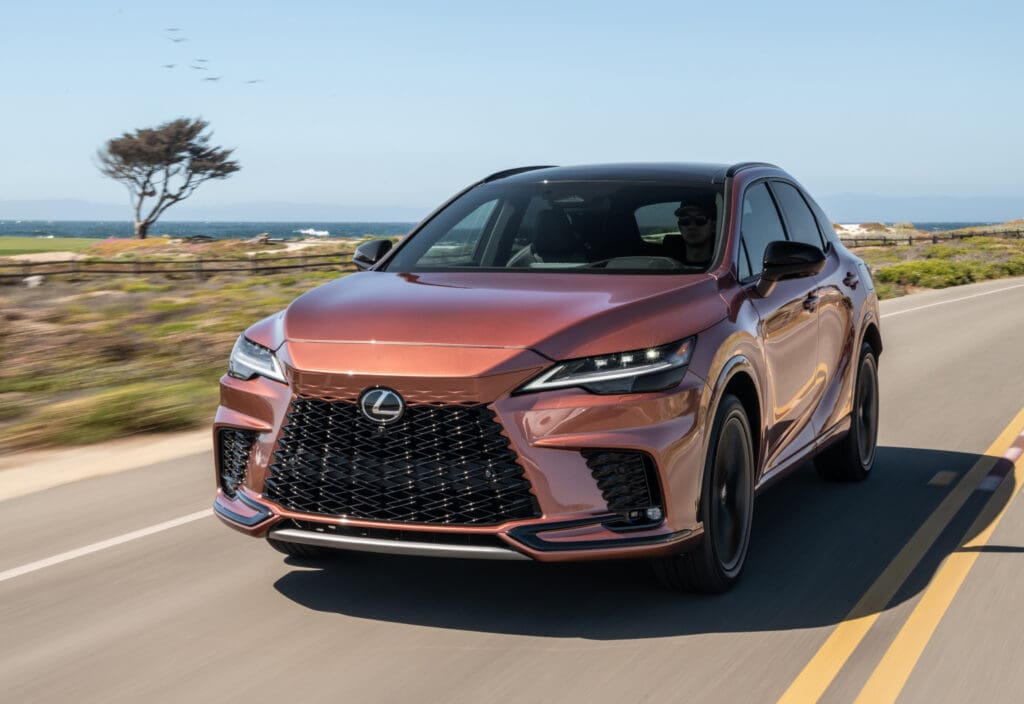
If you think GoodRx is where you go for discount meds, think again. For me, a good RX, if not great RX, is Lexus’ fun-driving RX 500h F Sport hybrid SUV. With its tasty combo of zippy performance, nimble handling, luxury accommodations and fuel-sipping economy, this sporty, mid-sized SUV is definitely just what the doctor ordered. It’s not exactly new, being introduced back in 2023 when Lexus came up with the redesigned, fifth-generation RX. But as the RX continues to be Lexus’ best-selling model, I felt it was worth a closer look. Today, Lexus offers a slightly-bewildering line-up of 19 different RX models, ranging from the front-wheel drive RX 350 starting at $51,175, to the latest, range-topping RX 450h+ plug-in at $73,310. Our bold-looking RX 500h F Sport Performance tester, painted a shade of molten lava that Lexus calls Copper Crest, stickers from $66,850, or around $72,000 very nicely loaded. That’s competitive with key rivals like BMW’s X3 and X5, Mercedes GLE, Genesis G70, Volvo XC60, Infiniti QX60, Acura MDX and Audi Q5. What adds to the Lexus’ appeal is its multi-tasking powertrain. It pairs a turbocharged 2.4-liter four-cylinder packing 271 horseys with twin electric motors to give a combined 366-hp and 406 lb-ft of torque. Don’t get too excited by all that F Sport Performance badging. The focus here is still more about Lexus-style smoothness, comfort and refinement. But pedal to the metal and the 500h can still scoot from standstill to 60 in 5.9 seconds, with the rear-mounted electric motor delivering instant torque to help get things moving. There’s also no shortage of mid-range thrust, to spear you past slower traffic, or slingshot you out of an on-ramp for safe freeway merging. And adding to this feisty performance is a lovely six-speed automatic, which is super-responsive, quick-to-shift and buttery-smooth. There are paddle shifters too for D-I-Y shifting. The bonus here is impressive fuel economy from that hybrid set-up. For a performance SUV, the EPA rating of 27 mpg city, 28 mpg highway and 27 mpg combined is hard to beat. While this 500h is no match through the curves for, say, a BMW X3 M or Audi SQ5, it’s still a fun, smile-inducing drive, especially here in curve-deprived Florida. There are 21-inch alloys at each corner shod with sticky Michelin Pilot Sport rubber, adaptive dampers with a Sport setting, and rear-wheel steering that can turn the rear wheels in the same direction as the fronts to heighten agility and nimbleness. Hit the brakes and the big 15.7-inch rotors at the front, clamped by six-piston calipers, can halt the 500h as effectively as throwing an anchor out the back. And having that electric motor on the rear axle also means handling-enhancing all-wheel drive. Add to all that nicely-weighted, nicely-precise steering and the F Sport is just a lot of fun. It also looks the part with that bold, still-polarizing spindle grille, air gulping side intakes, towering, black-painted 21-inch rims, and swoopy roofline. The coppery paint of our test car only added to the visual drama. The F Sport theme continues inside with hip-hugging, heavily-bolstered front sport seats adorned with F Sport logos, a chunky, perforated leather steering wheel, aluminum pedals, and the choice of Rioja Red – a must-have – or Black color themes. The center of the dash has a big, 14-inch high-def touchscreen with clear graphics. But I wish you didn’t have to go into the screen to select the drive mode settings. What’s wrong with a switch beside the gear selector? And despite the rest of the cabin featuring typical Lexus quality and craftsmanship, the steering column stalks feel like they’re made from about-to-snap dried twigs. Space inside the cabin, however, is excellent, with plenty of legroom in the back and a standard glass roof to add light. Generous cargo space behind the rear seat too. No, all that F Sport Performance badging doesn’t make this 500h a true, hard-core performance SUV. But I really like the balance it offers with its smooth-riding comfort and refinement. It is a Lexus after all. And definitely a Good RX.
Electric Avenue: 2026 Cadillac Vistiq Sport EV
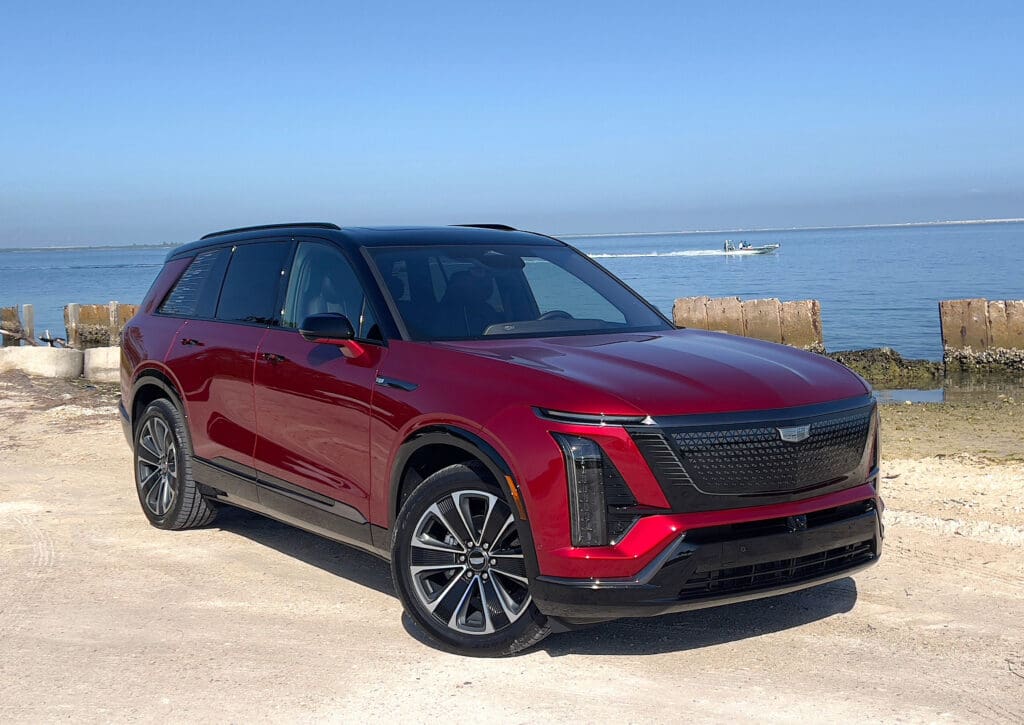
Ignore the fact that Cadillac’s XL-sized Vistiq – yes, I’m no fan of the name either – is an EV with a plug and a big pack of Duracells. What we have here is just a terrific, super-capable, super-luxe, family-sized SUV. With a bunch of cool party tricks. Top of the party trick list would be its ability to accelerate like a rock emerging from David’s Goliath-slaying catapult. Here’s an elephantine, 6,163-pound whopper that, courtesy of its 615 ponies delivered from a Grand Coulee Dam of joules, ohms, volts and watts, can rocket from standstill to 60 mph in a mere 3.7 seconds. That’s quick. No, that’s insanely quick. Then there’s 23. It’s the number of speakers hooked-up to the Caddy’s standard, ear-bleeding AKG Studio sound system with crystal-clear, multi-dimensional sound courtesy of Dolby Atmos processing. Yes, there are louder vehicular sound systems out there. But the difference here is the whisper-quiet running that comes with the Vistiq’s silent electric power. At 75 mph on I-75 you can hear every finger-pick on the Beatles’ “Blackbird” lullaby. This new Vistiq sits mid-point in Cadillac’s growing armada of EVs, above the entry Optiq and Lyriq, but below the just-too-huge Escalade IQ. Vistiq pricing starts at a competitive $79,390 for the Luxury spec and tops out with the all-bells-and-whistles Platinum at $98,490. The mid-range Vistiq Sport we’re driving stickers from right around $80,000. For all you EV range-anxietists out there, I know the burning question you want answered is “what’s the range?” The EPA estimates 305 miles, which was pretty close to my real-world, full-charge figure of 295 miles. Good, though perhaps no cigar compared to the 465 miles you get with the Escalade IQ. With its honking 102 kWh lithium-ion battery pack and up to 19.2 kW charging speeds, plugging into a DC fast-charger can give you around 80 miles of range in 10 minutes. And these days, all GM EVs can hook-up to any of the 30,000-plus Tesla Superchargers out there. Step up into the cabin – and it is a big step up – and you’re greeted by the kind of interior space normally reserved for Madison Square Garden. No wonder they call the Vistiq the “Baby Escalade”. Take your pick from six or seven-seat configurations with either a middle-row bench or comfy captain’s chairs. Even back in the third row, despite the battery pack raising the floor and stealing some space, there’s limo-like comfort. Up front, the Vistiq comes with a lovely 33-inch-wide curved, high-rez LED display that looks like something out of your local Cineplex. And I like that Caddy has grouped all the climate controls on a separate eight-inch tablet that sprouts from the center console. As you’d expect of an upscale Caddy, the cabin materials are top notch, easy on the eye and soft to the touch. But another of those strange choices is that proper leather isn’t even on the options list; it’s the faux synthetic stuff. Not that you’d know the difference. My favorite? The carbon fiber-like trim with copper-colored inlays. Very cool. While cargo space behind the third row is a modest 15.2 cubic feet, power-fold the second and third rows and the available space soars to a cavernous 80.2 cubic feet. There are Airstreams with less. But don’t go looking for a “frunk” – that’s EV-speak for front truck – there isn’t one. Out on the road, the Vistiq is all about smoothness and luxury, quietness and refinement. It might be worth stepping up to the Premium Luxury and Platinum models to get the standard air suspension which gives an extra-smooth ride. But no matter the model, the ride is magic-carpet-plush, with lumps and bumps nicely absorbed and body lean well-contained. The steering is precise and nicely-weighted too, though you’re never left in any doubt that you’re helming a 6,000-pound-plus honker. Thankfully there are huge brakes at each corner to slow things down. As for one more party trick to enjoy, there’s the little red “V” button on the steering wheel. It stands for Velocity Max, and one press raises the electric output to 129 per cent of its peak, unlocking the full 650 lb-ft of torque and that 0-to-60 in 3.7 seconds thrust. Whoa Nelly.
Going Once, Going Twice: Don’t Miss the Mecum Kissimmee Collector Car Auction
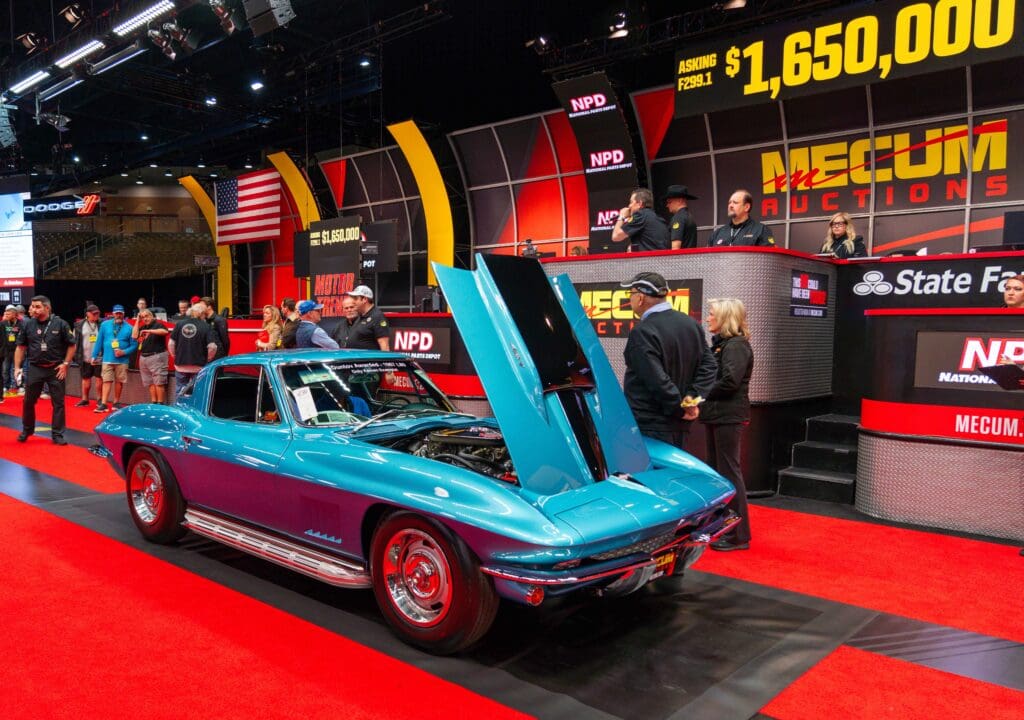
Be still my beating heart. Kicking off this Tuesday is the annual Mecum Kissimmee, the world’s biggest collector car auction with a staggering 4,500 unique cars, trucks, motorcycles, boats, you name it, crossing the block over 13 action-packed days. This is a truly amazing spectacle for anyone with the merest hint of gasoline in their veins. Pretty much every collector car you can think of will be there, lot number on the window, waiting for a new buyer to take it home. Looking for a classic Corvette? Mecum has over 300 up for grabs. Ferraris? Take your pick from over 125, including 46 rarer-than-hen’s-teeth examples from the famous Bachman Collection out of Greeneville, Tennessee. All 48 are being offered without reserve. And it’s one very special Ferrari that’s headlining this year’s auction. Known around the world as the Bianco Speciale, this 1962 Ferrari 250 GTO is the only one of the 36 GTOs built that came out of the factory painted this shimmering shade of pearly white. How much will it fetch when it glides across the auction block on Saturday the 17th? Estimates range from a staggering $60 million to $72 million. Then there’s one of my favorites, the 1963 Corvette Studio Concept Split Window, designed by legendary designer Peter Brock while he worked at GM Design. His sketches of this car, originally done back in 1957, went on to become the iconic Split Window Corvette. This one-of-one car is from Brock’s personal collection, It’s not just mega-priced supercars going under the hammer. This is an auction event for all pocketbooks. I doubt the ’83 Datsun 280ZX selling with no reserve on Wednesday will reach $5,000. Same with literally hundreds of other lots, including a 1995 Chevy Caprice State Trooper Patrol Car complete with roof lights. “That’s the great thing about Mecum Kissimmee, there is literally something for everyone,” says Breeann Poland, Mecum’s director of communications and marketing. “For the young enthusiast who wants to get into restoring something, to the discerning collector looking for a best-of-the-best example, they’ll find it here”. Talking of best-of-the-best, look no further than the fabulous gold 1969 Chevrolet Yenko Camaro Prototype from the legendary Pennsylvania muscle car builder. This was the original ’69 Yenko Camaro prototype and has been featured on multiple magazine covers. Then there’s the truly spectacular 1965 Ford GT40 Mk1, driven by Carroll Shelby when it was a Shelby American demonstrator, and one of only 48 GT40 Mk 1 race coupes built. Estimates range from $5.5 million to $6 million. For me, the magical appeal of Mecum Kissimmee is simply strolling through the more than a dozen vast marquees on 60 acres and gazing at all this amazing machinery. Open the doors, slide behind the wheel, feel the leather? Go right ahead. And for those vehicles that fail to meet their reserve, the beauty of Mecum is that they get moved to an adjacent ‘The Bid Goes On’ field. Here deals can be worked out with the Mecum team together with the owner, without the pressure of the auction. As most owners don’t really want to take their unsold car home, most are willing to negotiate. Don’t want a vehicle? Mecum will have on offer over 1,500 pieces of Road Art memorabilia. Everything from neon signs, to vintage gas pumps, coffee tables made with big-block V8s, to car art, to Dr Pepper signs. I’m quite partial to the Volkswagen Bus Charcoal Grill. That’s going to be one hot item. Mecum Kissimmee is being held at Osceola Heritage Park in Kissimmee just south of Orlando from Tuesday January 6 to Sunday January 18. Tickets start at around $28 for a one-day pass. For more information go to www.mecum.com. Don’t miss it.
Best of 2025: Mercedes-Maybach SL 680
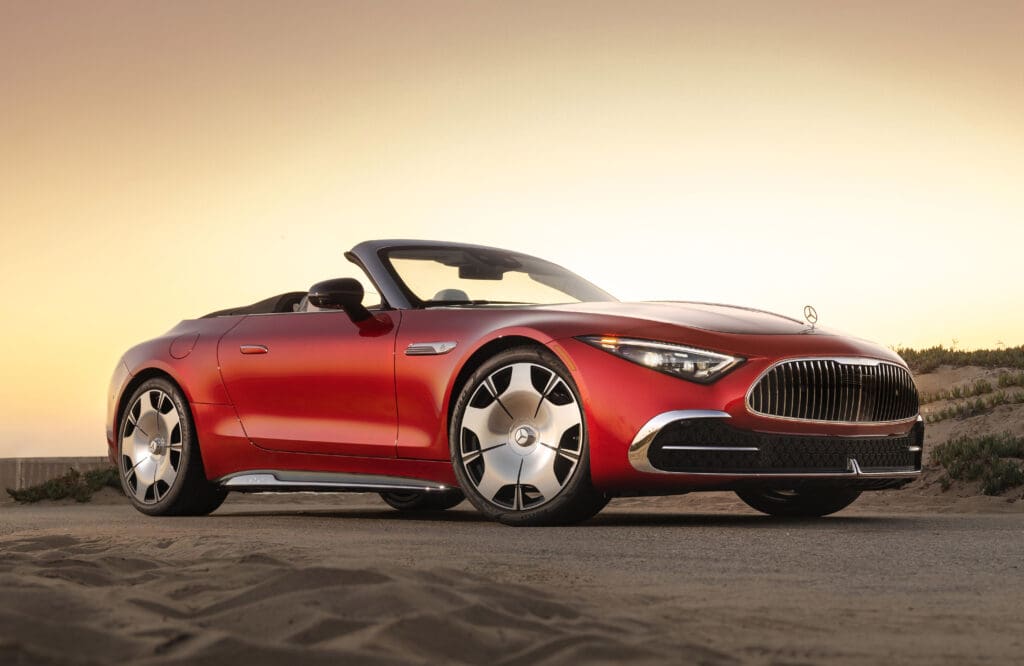
‘Tis the season for all those ‘Best of 2025’ accolades. Not wanting to be left out, may I humbly present the Registry Tampa Bay Best Automobile of 2025 Award. Drum roll and pass the golden envelope please…the award goes to the exquisite Mercedes-Maybach SL 680 Monogram. I know, I know it’s a pretty specialized vehicle, with just two seats, 577 horsepower, and an eye-watering $250,000 price tag. But it was simply the best new car I drove in 2025. Yes, I loved the new Lucid Gravity and Cadillac Vistiq all-electric SUVs, the electric VW ID. Buzz too. More affordable offerings like Subaru’s Forester Hybrid and Honda’s Accord Hybrid were also stand-outs. But the SL 680 made my heart soar. Here is Mercedes-Maybach’s first open-top, super-luxe two-seater, and rightly-described by the brand as its “sportiest and most extravagant” offering yet. Naturally it’s closely based on Mercedes’ newest SL roadster, particularly the SL63 AMG. But it’s much more than a re-badged model. A concerted effort went into making it look different, and to sharpen its focus on hedonistic luxury, cosseting comfort, and refined performance. See one in the metal and it looks so much more imperious than a regular SL. Design changes include a more imposing front end, a lovely new thin-bladed, illuminated chrome grille with Maybach writ large at the top, and fabulous new 21-inch forged alloys. And you know when you’ve ascended to the very pinnacle of luxury when your new car comes with bleach-white carpets the color of Chiclets, or Simon Cowell’s veneers. The carpets, along with the hip-hugging leather seats, door panels, and even the steering wheel, are so searingly white that Ray-Bans should be standard equipment. What’s equally interesting here is that for now, white is the only choice of interior coloring on offer for the first run of SL 680 Monograms. Only two exterior colors as well; Red Ambiance, or glossy White Ambiance, each with a contrasting Obsidian Black hood. The surprise and delight of that noir bonnet is that it comes embellished with Maybach’s trademark Double-M logos that, at first glance, look for all the world like those on a Louis Vuitton Monogram handbag. And if there aren’t enough Double-Ms, the black-only canvas convertible top is also plastered with Maybach logos. In the words of Zero Mostel in The Producers: “When you got it, flaunt it”. Inside, the key differentiator between Mercedes SL and Maybach SL is found behind the seats. Gone are the fairly-useless plus-2 rear pews, replaced with a more practical flat shelf, naturally trimmed in retina-searing Crystal White Nappa hide. Pop the logo’d hood and there shoe-horned in the engine bay is the SL63’s 577-hp 4.0-liter twin-turbo V8. As in the Mercedes, it’s mated to a glorious nine-speed automatic and drives all four wheels. Time to drop the logo’d top – a mere 15 seconds start to finish – and take to the road. And what is instantly noticeable is the smoothness and serenity of the Maybach’s magic carpet-like ride. Yes, there’s still a Sport mode that unleashes the Kraken and slingshots the Maybach from standstill to 60 mph in 4.0 seconds. But the focus here is definitely more on relaxed, refined, Teflon-smooth boulevarding. It is such a lovely car to drive and surely the smoothest-riding SL ever. Yes, maybe it should have had the velvety 6.0-liter V12 power of Maybach’s S680 limo to make it truly special – Mercedes dropped the V12-powered SL65 in 2011. Even better, an all-electric powertrain. But the V8, especially with Maybach massaging, delivers towering performance that, at the touch of a button, can get close to full SL63 muscle. For the Maybach’s quarter-million dollar price tag, your shopping list would include the likes of Aston Martin’s wondrous DB12 Volante ($269,000), Bentley’s latest Continental GTC Speed Convertible (from $336,350), or Mercedes’ manic 805-hp SL 63 SE Performance (from $208,300). But when it comes to rarity, the Maybach and its ultra-white carpeting wins hands-down. Just remember to wipe your feet.
Sleigh Ride: Ram 1500 RHO Crew Cab 4×4
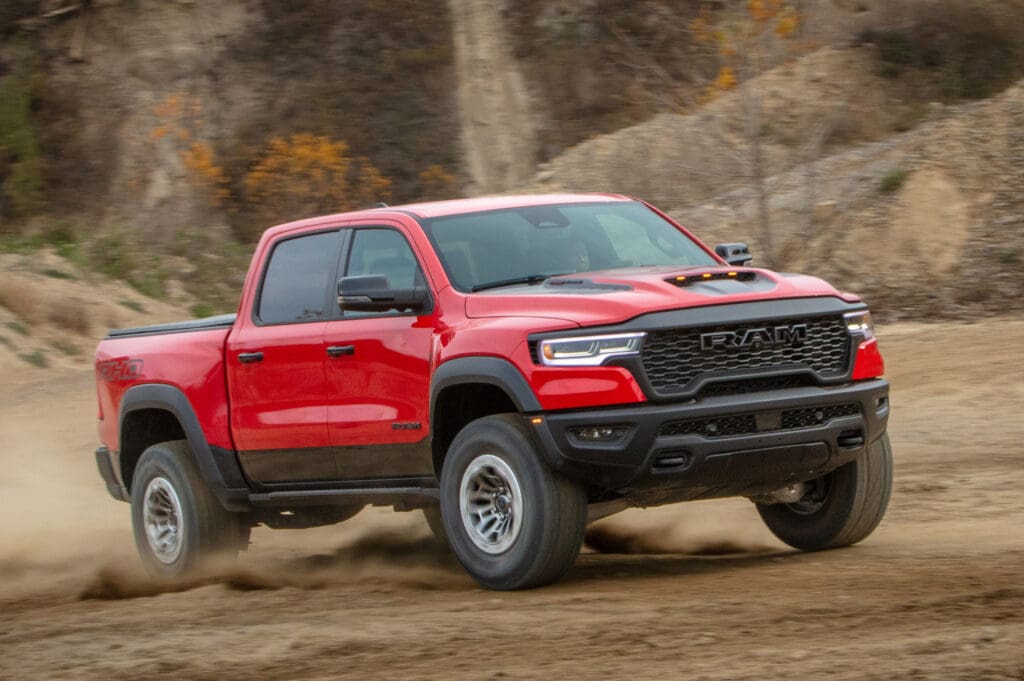
Listen up Santa. That sleigh of yours might be getting a little past its sell-by date when it comes to getting all those gifts delivered by Christmas morning. And while your team of reindeers, headed-up by that feisty red-nosed Rudolph, has done a stellar job since what, the 1800s, I feel they might be past their prime. So how about something with 540 horseys, a big pick-up bed for a mountain of gifts, and the option of pulling a huge 8,380-pound Uhaul for the overflow? Santa, meet the new Ram 1500 RHO Crew Cab 4×4. This is Ram’s newest, high-performance off-road sport truck, and the milder, more-restrained successor to the dearly-departed, 702-hp Hellcat-powered Ram 1500 TRX bundle of insanity. The headline news with the RHO is the new, twin-turbocharged 3.0-liter inline six-cylinder under the hood that Ram dubs the Hurricane. No, it isn’t a patch on the crazy supercharged 6.2-liter V8 powering the TRX. But then again, not everyone wanted to wrangle 702 horseys and listen to a V8 that sounded like Bubba Wallace’s NASCAR racer. Instead, the $73,340-and-up RHO delivers a still-Hurricane-force 540 horsepower and 521 pound-feet of torque, which is enough to catapult this bad-boy pick-up off the line and on to 60 mph in just 4.4 seconds. That’s as rapid as the 400-hp twin-turbo Nissan Z sportscar I tested recently, and a second quicker to 60 than the RHO’s main rival, Ford’s F-150 Raptor. And the beauty of the Hurricane versus Hellcat engines is weight. Compared the the TRX’s iron-block V8, the RHO’s aluminum-block inline-six is considerably lighter. That allows the RHO to tow up to 8,380 pounds, which is 280 more than the TRX, which means a bigger trailer for Santa to haul his load of neatly-wrapped gifts. See this new RHO heading south from the North Pole and it certainly looks the part of a tough truck. There’s a huge, air-gulping black grille, and a hood intake like Godzilla’s nostrils, complete with a trio of work-truck amber lights. At each corner, blown-out fender flares cover towering 35-inch Goodyear Wrangler Territory off-road tires. And in case you forget what you’re driving, there’s huge RHO badging on the hood and rear fenders. As you’d expect, this new RHO is designed to play in the snow, sand, mud, or pretty much anything. Standard equipment includes rugged Bilstein Black Hawk adaptive performance shocks, and suspension that allows 11.8 inches of ground clearance, plus 13 inches of front travel and 14 inches at the rear. After a week of climbing in and out of our RHO tester however, I’d recommend investing the $1,195 in the available Mopar off-road running boards. Otherwise it’s a huge step-up into the cabin. Talking of cabin, the interior quality and superior fit and finish that these latest Ram 1500s are famed for is only enhanced. Black perforated leather seats are standard, with lovely contrasting white stitching. Nice, chunky, leather-wrapped wheel too with paddle shifters close by. There’s a big 12-inch liquid crystal digital instrument display and 14.5-inch touchscreen in the center of the dash, plus an available 19-speaker Harman Kardon stereo. The RHO is only available as a four-door crew cab (with a 5-foot 7-inch pick-up bed) so there’s no shortage of rear-seat legroom and headroom. Pay the $1,700 extra for the dual-pane glass roof and the cabin gets flooded with light. So how does it drive? Pretty amazing for a tough-as-nails, off-road-focused sport truck. While RAM lovers still put the V8 TRX up on a lofty pedestal, this RHO is pretty much just as fast, covering the 0-to-60 dash in only 0.6 seconds less. And it’s much quieter and more refined inside at speed, and rides with luxury sedan smoothness, even over lumpy asphalt. I love this truck. Yes, it can still get pretty pricey when you start checking the options boxes – the Level 1 Equipment Group package alone costs an extra $10,000 but includes everything you’d ever want. The result is a price tag that can be close to $90,000. Maybe worth sending a note to Santa to get one gift-wrapped and just in time for Christmas. Yo, Ho, Ho.
Blast from the Past: Nissan Z Performance

Affordable, fun-to-drive, two-seaters are fast going the way of Sony Walkmans, Mickey-D’s Snack Wraps and Napster. The latest casualty; Toyota’s Supra, which gets the chop next spring. Which makes Nissan’s evergreen Z something of a treasure. First launched way back in 1969 as the beloved Datsun 240Z, it’s now in its seventh generation and still going strong. So when the call came offering the latest Z Performance for a few days of testing, I raised my hand faster than a fifth-grader in need of a bathroom break. If you love sportscars, the Z still checks all the right boxes for a fun-driving two-seater. It’s fast, handles like a go-kart on steroids, has the kind of swoopy styling to make your heart pitter-patter, and is still surprisingly affordable. How affordable? The entry Z Sport stickers at $44,110 including destination. Step up to the even-sportier Z Performance for $54,110. Or go for the cool Z Heritage Edition with deep purple paint and gold wheels at $57,050. Want a Z for the track? The hardcore Z NISMO with stiffer suspension, bigger brakes and 20 more horseys can be yours for an albeit pricey $66,890. For me, the Z Performance I’m driving, is the one to have. Compared to the starter Sport, it comes with a tighter suspension set-up, a handling-sharpening limited slip differential, upgraded brakes, and forged 19-inch alloys. And like all Zs, it features the fabulous twin-turbocharged 3.0-liter V6 borrowed from Infiniti’s recently-departed Q50 Red Sport 400 sedan. Seemingly running on molten molasses, this potent, super-smooth six cranks out an impressive 400 horsepower and 350 pound-feet of torque – uprated to 420-hp and 384 lb-ft in the Z NISMO. Best of all you get to choose between a six-speed manual shifter or nine-speed automatic for no extra cost, though suprisingly, the NISMO only comes with an automatic. See the Z in the metal and it still looks like a true spiritual successor to that original ’69 240Z. The 2023 makeover that launched the seventh-generation focused on all those cool retro design cues. Like that mile-long hood, stubby, cut-off rear and straight-back coupe roofline. That grille opening? Pure 240Z. Inside, it’s a lovely blend of retro and modern. While the three hooded gauges on top of the dash and handbrake (remember those?) are a nod to the original Z, the 12.3-inch digital gauge cluster and 9-inch central touchscreen are bang up to date. And seated behind that chunky wheel, feeling the tight grip of that body-hugging driver’s seat, and you instantly feel ready to carve some curves. Our test car features that six-speed manual, which is a mix of good and not-so good. Yes, it meets the mantra that a ‘proper’ sportscar has to have a stick. And through the 318-curve Tail of the Dragon in the Great Smoky Mountains, it’s probably an absolute blast. But in our traffic-snarled Tampa Bay, the combo of an overly-long travel clutch and stiff, notchy shift action takes away some of the fun, making gear-shifting a chore. It may be sacrilege to say it, but the nine-speed automatic with paddle shifters would be my first choice. Either way, the Z-car feels deliciously quick. Slingshotting away from a stop light, you’ll see 0-to-60 mph sprinting in 4.5 seconds with the stick, or 4.3 secs with the automatic. And under pedal-to-the-metal acceleration, that twin-turbo V6 sounds just sensational, all creamy-smooth and baritone at lower revs, soaring to a crescendo worthy of Bocelli near the 7,000 rpm red line. Find yourself a curvy on-ramp, or sinewy backroad, and the Z steers like its following invisible rails, with steering that’s as sharp as Jimmy Kimmel one-liner, and with near-perfect weighting. Need to stop, like right now? The Z Performance’s pizza-sized brakes with four-piston calipers at the front, are as effective as hurling an anchor out the back. Even with fewer two-door sports coupe choices, the Z still faces some stiff competition in the form of BMW’s superb M2, Ford’s Mustang GT Fastback, and the still-available Toyota GR Supra. But this zesty Z is still a great pick when it comes to all-round driving fun.
Extreme Machine: Land Rover’s new Defender Okta
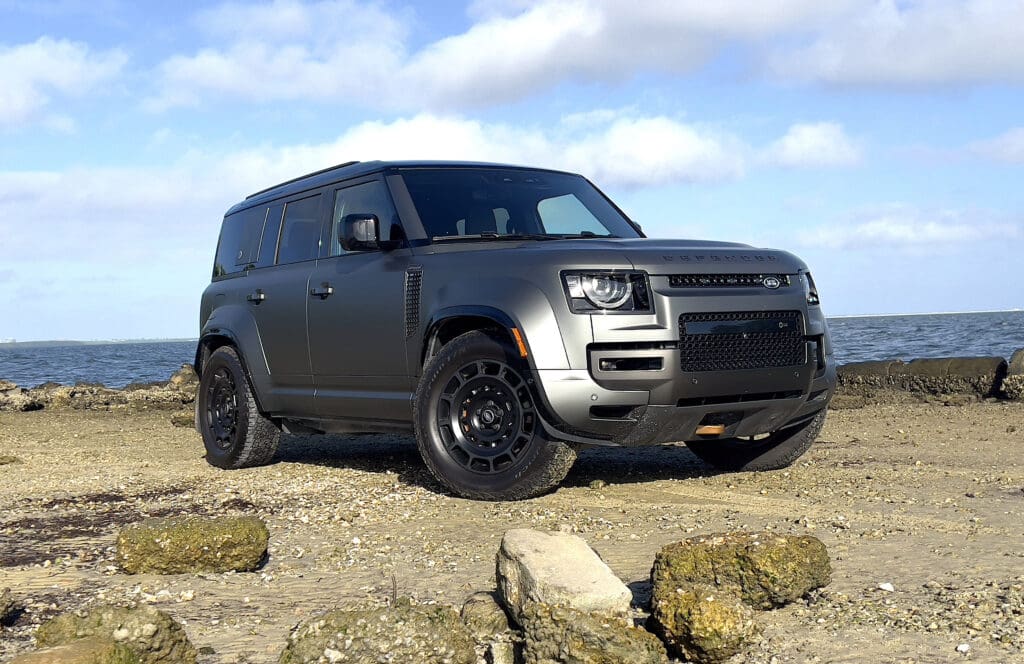
If there’s an official Bond movie villain vehicle, it’s without doubt Land Rover’s go-anywhere Defender. Starring in those beloved 007 romps No Time to Die and Spectre, a seemingly never-ending fleet of these stealthy, all-black 4x4s slammed over boulders, bounced off trees and generally got demolished in their dogged pursuit of Craig, Daniel Craig. So connected is the Defender with the 007 franchise that back in 2021, to celebrate the 25th Bond movie release, Land Rover offered-up a Defender V8 Bond Edition to coincide with the premiere of No Time to Die. Any color you wanted so long as it was black. They built just 300, with pricing from $116,000. Had the next Bond movie been about to be released, trust me the baddies would behind the wheel of Land Rover’s wickedest Defender ever, the new Defender Okta. Here is quite simply the most powerful, most capable and flat-out the fastest Defender yet. How speedy? With a fire-breathing twin-turbo 4.4-liter V8 under that Kansas-flat hood cranking out 626 horsepower, it can slingshot from zero to 60 mph in a quite-insane 3.8 seconds. And not quit slingshotting until 155 mph is showing on the speedo. But first a word about that quirky name, Okta. Certainly sounds like some Dave Bautista-style Eastern European thug who’d be on the tail of Bond’s Aston Martin. It’s actually derived from the octahedral shape of uncut, raw diamonds. And as we know, diamonds are the hardest and toughest of any natural material. Here is Land Rover’s answer to those off-roading bad-boys, Mercedes-AMG’ box-on-wheels G63, Lamborghini’s Urus, the electric GMC Hummer SUV, and less pricey, but similarly-muscular offerings like Ford’s Bronco Raptor and Jeep’s Wrangler Moab 392. Talking of price, a 2026 Octa kicks off at around $160,000 and crests at over $170,000 nicely loaded. That’s around $37,000 less than the Mercedes. One welcome change is that not all Oktas come in stealthy black. Choose from Borasco Grey, Charente Grey, a lovely Sargasso Blue, and rich Petra Copper. Want black? It’ll cost you an extra $10,000 for the stand-alone Octa Black model. Confusing the equation even more, the early, now-sold-out Edition One models, like our test car, came with mossy Faroe Green paint. As you might expect, the Okta starts life as a standard Defender 110 and gets a new wardrobe of exterior body armor to give it the visual appearance of Tony Stark in Iron Man. Wider wheel arches add 2.7 inches to the beam and cover new 20-inch wheels shod with knobbly, specially-developed 33-inch diameter Goodyear Advanced All-Terrain tires. Add to those, a unique grille design, new front and rear bumpers, a new four-pipe active exhaust, and layers of tough underbody protection, no doubt to fend off the occasional land mine. The really big change comes under the hood. While the regular Defender V8 features a 518-hp supercharged 5.0-liter V8, the Octa shakes things up with a BMW-sourced twin-turbo mild-hybrid 4.4-liter V8 packing that 626 hp. It’s the same one used in the Range Rover Sport SV and similar to the motor powering BMW’s potent X5M 4×4 and M5 sedan rocketship. While most Oktas will no doubt spend their lives terrorizing the Trader Joe’s parking lot, just a few might get their tires dirty on a trip to a trailhead or the owner’s Aspen ski lodge. And for the purpose of going offroad, the Okta is seriously over-qualified. In addition to standard four-wheel drive, beefed-up suspension components and bigger brakes, it gets a trick innovation called 6D Dynamics. This features height-adjustable air springs and hydraulically cross-liked adaptive dampers which virtually eliminate pitch and body roll on and off-road. McLaren uses a similar system for its 750S supercar. It translates into pretty astonishing on-road handling for a bruiser that tips the scales at around 5,900 pounds and stands over 78 inches tall. Coupled with faster, more precise steering, a Dynamic mode that adds Red Bull to all major systems, plus 553 lb-ft of twin-turbo torque, and the Okta is a total, undiluted blast to drive. I could just imagine the next Bond – whoever that might be – wide-eyed as his Aston’s rear-view was filled with the snarling snout of a new Defender Okta. It would be enough to scare the living daylights out of him.
A Prized Car Condo at The Motor Enclave Has Just Hit the Market
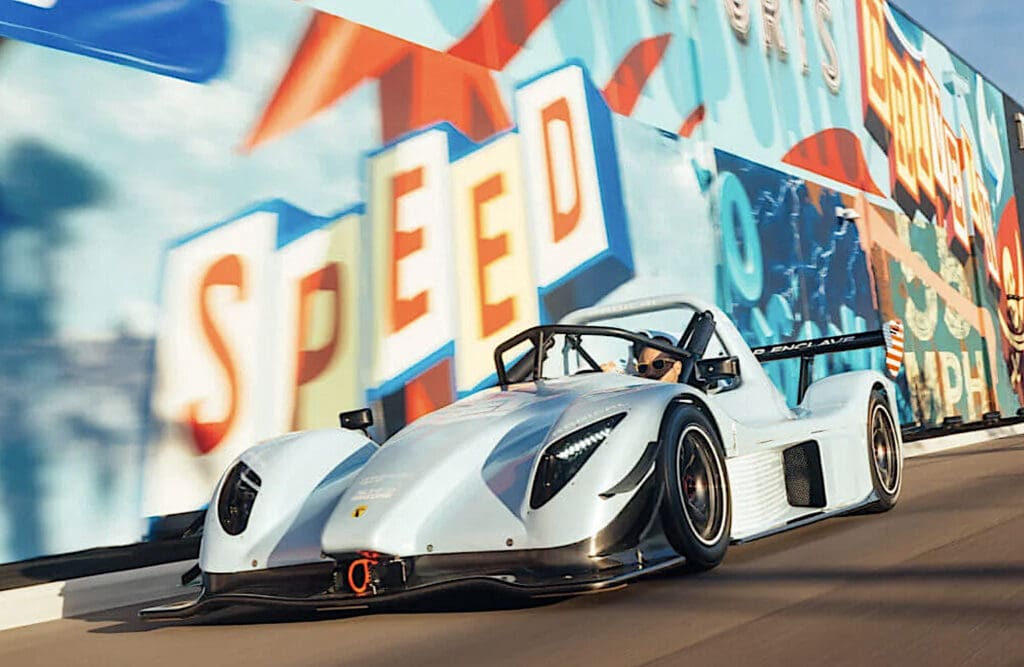
Anyone with a passion for fast cars and pedal-to-the-metal driving will know all about The Motor Enclave in Tampa. Since its opening in January 2024, this 200-acre motorsport nirvana just 15 minutes east of downtown, has fast become a playground for sportscar lovers attracted by its snaking 1.72-mile, Formula 1-style track, 100-acre off-road course, and two-acre vehicle dynamics/autocross pad. What also sets this world-class development apart are the 300 private garage condos ringing the circuit making The Motor Enclave the largest private garage community in the world. As you’d expect, all the 300 were quickly snapped-up and are in the process of being transformed into everything from a place to display private collections, motorsport-inspired offices, race workshops, or stylish personal retreats. Rarely do units come-up on the re-sale market. Yet, in a unique opportunity, one of the best-of-the-best has become available; a rare balcony unit at 6500 Motor Enclave Way, #1004. What sets it apart is that it’s one of only six of the 300 that offers jaw-dropping views of almost the entire circuit. “The aerial imagery tells the story. The unit sits in one of the most enviable positions on the property, with sweeping sight-lines capturing all the energy from the track,” explains Jason Teabout, realtor with the Mastry/Teabout Group, part of Smith & Associates, who holds the listing. What the $779,000 asking price buys is a blank-canvas 1,435 square-foot space, with soaring 25-foot ceilings high enough to add a mezzanine floor living area. Owners of similar units have used the mezzanine to create fabulous social areas with kitchens, dining areas, sofas and big-screen TVs, cigar bars and displays for car memorabilia. All that, together with an expansive ground-level space to showcase car or motorcycle collections, or store and work on race cars. Unit 1004 has space for six to eight vehicles, or more using car lifts to stack one above another. “This isn’t just another car condo,” explains Teabout. “The position and the private upper balcony offers a premium front-row view of all the action below. Track sessions, early-morning warm-ups, social gatherings like The Motor Enclave’s Cars En Coffees – there’s always something happening.” But it’s The Motor Enclave’s amenities that truly set it apart. Created by Michigan developer Brad Oleshansky, also behind the similar M1 Concourse in Pontiac, Michigan, its highlight is that 1.72-mile track designed by legendary Formula 1 track designer Hermann Tilke. It features 10 challenging corners, an endless hairpin and a long strait for high-speed thrills. For those times when you’re not hammering your Porsche 911 GT3 around the track, you can head-out in your ATV 4-wheeler, dirt bike or 4×4 kicking-up dust around the 100-acre off-road area with its miles of purpose-built trails. Want to try-out your racer’s new suspension setting, break-in that new set of Pirellis, or perfect your drifting skills? There’s that two-acre asphalt skid pad close by. Away from the track, The Motor Enclave boasts a 42,000 square-foot, two-story Event Center that can accommodate everything from a 12-person board meeting to a seated function for 1,200 with gourmet catering by Tampa’s Puff ‘n Stuff. The center also features a driver’s lounge and conference rooms, a car display area to check-out member’s prized rides, and a line-up of the latest driving simulators. And for fun with the family, there’s the Enclave Beach Club with a pool and resort-style amenities. The Motor Enclave also offers huge security and peace-of-mind. Garages feature hurricane-rated concrete construction with six-inch thick concrete floors, reinforced overhead garage doors, and the option of back-up generators for power during storms. Gated 24-hour security as well. For owners of pricey supercars or treasured collector cars, here is a true safe haven when the weather turns ugly. And all this a short drive from downtown, close to the intersection of I-4 and I-75 and a stone’s throw from Tampa Executive Airport. “Here is a chance to secure a truly premium position inside Tampa’s most exciting automotive community – a place built for people who see cars not just as machines, but as a lifestyle,” says Teabout. For more information, contact Jason Teabout on 912-398-8668 or go to https://www.smithandassociates.com/listing/6500-motor-enclave-way-1004-tampa-fl-33610-9442-tb8434232/
Wild Child: 2026 Hyundai Elantra N
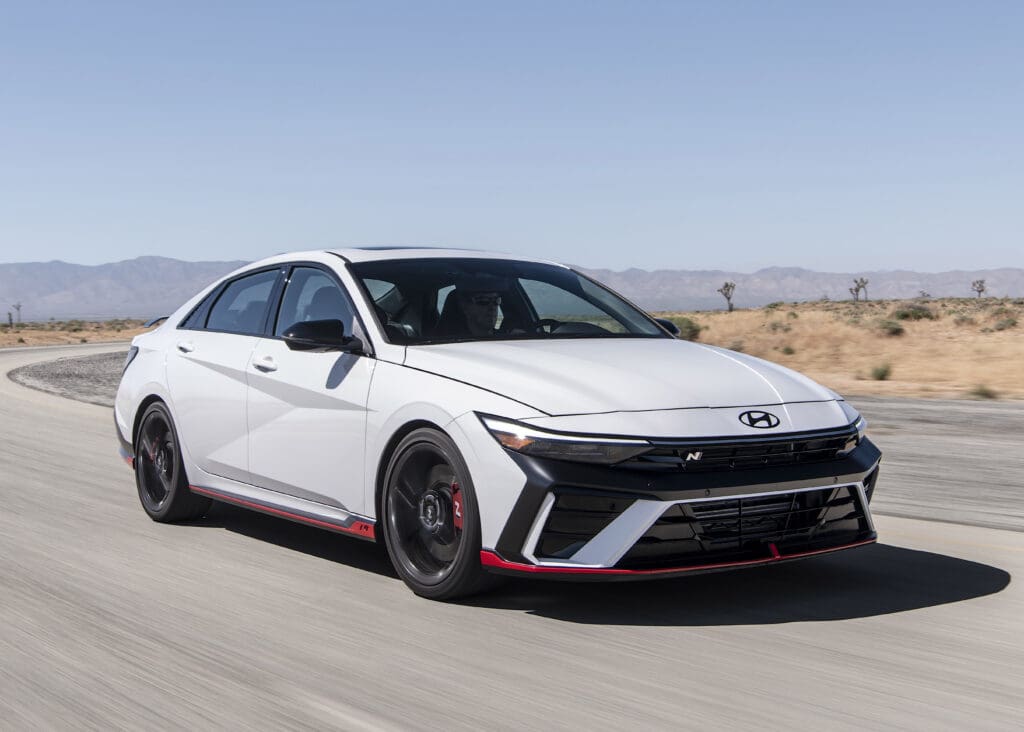
When it comes to performance these days, it’s all about the letters. With BMW it’s M. Mercedes goes with AMG. Audi with RS. For Cadillac it’s V. And for Hyundai, it’s N. After a week spent fooling around with the flagship 276-hp turbocharged N-car, the 2026 Hyundai Elantra N, you’d think the N stood for Nimble. Maybe Nippy. Definitely Nice. It actually stands for Namyang in South Korea that’s home to Hyundai’s global research and development center where the N-cars are developed. That and Nurburgring, as in the challenging German race track where Hyundai has a tech center and uses the snaking 13-mile circuit to develop its N cars. Hyundai first introduced its N brand way back in 2012, though it hasn’t exactly been flooding the market with models wearing that chicane-shaped N badge. Here in the US, it started with the Veloster N two-door, then the Kona N crossover, with the first Elantra N arriving in 2021. For me, it’s this latest Elantra N that makes the most compelling case for the appeal of Hyundai’s N performance brand. Here is a fun ‘n feisty performance four-door sedan with terrific performance, razor-sharp handling, killer brakes and one of the rudest exhaust notes this side of a Ford Mustang. Yet what truly sets it apart is that the price of all this grin-inducing fun, all this road-going excitement starts at just $36,345. Even loaded to the roof you won’t pay much more than $40,000. That, to me, makes it the performance bargain of the decade. Yes, there’s a just-unveiled Elantra N TCR Edition coming for 2026. But it’s humongous rear wing and no extra power or performance makes it, for me, not worth the expected $3,500 premium. The beating heart of every Elantra N is a 2.0-liter turbocharged four-cylinder cranking out a healthy 276 horseys and 289 torques. Opt for the 8-speed dual-clutch automatic – a $1,500 extra – and you’ll rocket from standstill to 60 mph in around 5.0 seconds. That’s quick. The added appeal of the automatic is the little red button on the steering wheel that Hyundai cutely names NGS, short for N Grin Shift. A quick tap gives you an extra 10 ponies for even zippier sprinting. Alas, our test Elantra N came with the standard six-speed manual gearbox, which for sportscar lovers, might sound like a terrific feature. It might have been had we lived in Northern California, or North Carolina where the roads are snaky and the driving is fun. Not so in our part of Florida, where the Elantra’s shifter and short-travel clutch were a pain in the booty during traffic-snarled, stop-start I-275 commutes. The manual shift also makes 0-to-60 sprints a lot slower, taking 6.1 seconds, or around a second more than with the auto. That said, find yourself a two-lane backroad with a few curves and this old-school stick shift certainly adds to the feeling of control and involvement. Add to that the Hyundai’s other performance attributes. Like the kind of steering that’s as sharp as McDreamy’s scalpel. And the kind of tight suspension that eradicates any body roll and makes the Elantra handle like a slot car. Yes, it makes for a firm, jittery ride that’s challenging over potholed back streets. But it’s in keeping with the N-car’s performance credentials. As too is the road roar from the standard Michelin Pilot Sport 4S rubberware. But the appeal here is that this fun-loving Hyundai will make every work-day commute, every school run, every trip to the grocery store feel special. And of course the car looks like it’s just come off the race track. I love those sexy-black 19-inch forged alloy wheels and racy-red calipers, the red body add-ons, and air-gulping front bumper. Inside it’s equally racy with a pair of front, body-hugging bucket seats, thick-rimmed steering wheel and shiny metal pedals that could have come out of a BMW M5. There’s also the real bonus of the Elantra N being a true four-seater with tons of legroom in the back so you can bring friends along for the fun. Make no mistake, this Elantra N is a blast on wheels, a thrill ride that won’t break the bank, a jolt of triple espresso after a lifetime of decaf. Definitely N-for-Naughty.
Force of Gravity: 2026 Lucid Gravity EV
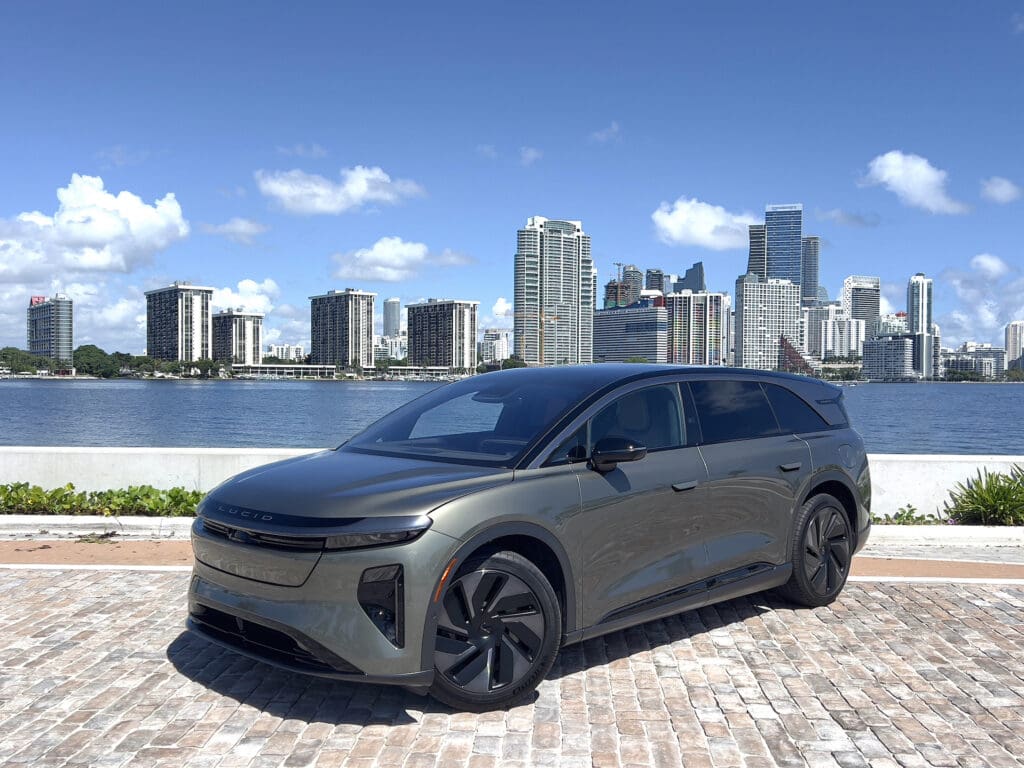
In the boxing ring blue corner, we have that supermodel of electric sedans, the scrumptious, sublime Lucid Air, quite possibly the most beautiful four-door to roll on four wheels. And an impressive EV too, with a battery range of up to 520 miles, and a range-topping Sapphire model packing 1,234 horsepower with the ability to slingshot from zero to 60 in, whoa, 1.89 seconds. But over in the red corner is arguably the Air’s fiercest and and most-formidable rival, an EV with equal supermodel beauty, a still-impressive 450-mile range. But with the big bonus of three rows of seats, room for up to seven grown-ups, and the load-carrying space of a UHaul truck. May I present the 2026 Lucid Gravity SUV. Our love affair with load-lugging, XL-sized SUVs means that it doesn’t take rocket science to predict this new Gravity will quickly become Lucid’s top-seller. And deservedly so. It blends swooning style with real practicality, and best-of-the-best battery technology. Competitive pricing too; think $79,900 for the entry Touring, and $94,900 for the Grand Touring I’ve been driving. See it in the metal and, while not as show-stopping, style-wise, as the Air, it’s still a head-spinner, with that high waist, swoopy roofline and swept-back windshield. No, it’s not really an SUV in the traditional, boxy, Caddy Escalade fashion. Dare I say it, it’s more of a minivan, or crossover like the old Mercedes R-Class. It certainly feels minivan-esque when you pop open that high-lifting tailgate. Those third-row seats, quite-brilliantly, fold flat directly into the floor, kinda like Chrysler’s Stow ‘n Go seats. Now fold the second row pews and you have a load space as flat as the Everglades. Just look at the numbers. With the seats tucked away, the Gravity offers a cavernous 114 cubic feet of cargo space. And the beauty here is that the load height is sedan-like, so no hernias lifting-in that big box from Best Buy. Want more? There’s an 8.1 cubic-foot “frunk” up front. There are some sweet interior improvements too compared with the Air. The show-stopper is the new, curved 34-inch-wide 6k OLED touchscreen that sprawls across the dash, with a 12.6-inch tablet-like OLED display below it. Together they can deliver what Lucid calls its “Sanctuary” experience. Need to re-charge your brain while you stop to re-charge the car? Hit the Sanctuary button and zen-like scenes play on the big screens – I liked the billowy clouds. You might want to reserve the Sanctuary experience for night-time, or at least cloudy days. In the searing midday Florida sun, sunlight floods through the Gravity’s massive glass roof washing-out the screens. And with no electro-chromatic dimming, or simple sunshade, the top of your head gets broiled. Time to drive. And here this new, built-in-Arizona Gravity is a masterpiece in motion. Yes, you get that rock-out-of-a-catapult acceleration that comes with most big-battery EVs. The dual-motor Gravity Grand Touring however, with its impressive 828 horsepower and 909 lb-ft of torque, catapults to 60mph from standstill in just 3.4 seconds. The kids will think you’ve taken them to Disney. This supercar-like performance is matched, impressively, by supercar-like handling, which is, to me, what sets the Gravity apart. With its trick rear-axle steering, adaptive air springs with three levels of stiffness, and steering hardware similar to Porsche’s 911, this thing carves curves like it’s being vacuumed to the blacktop. It can go the distance too with its real-world range of up to 450 miles, honking 123 kWh battery, and new Tesla-style charging port that lets you add up to 200 miles of range in under 11 minutes. There’s certainly no shortage of rivals in this booming sector of the EV market: BMW’s iX, Rivian’s R1S, Cadillac’s Vistiq, and Tesla’s Model X. For now though, this new Lucid is the Rocky Marciano of EVs.