


Glassy Smooth: Nissan Murano Platinum AWD
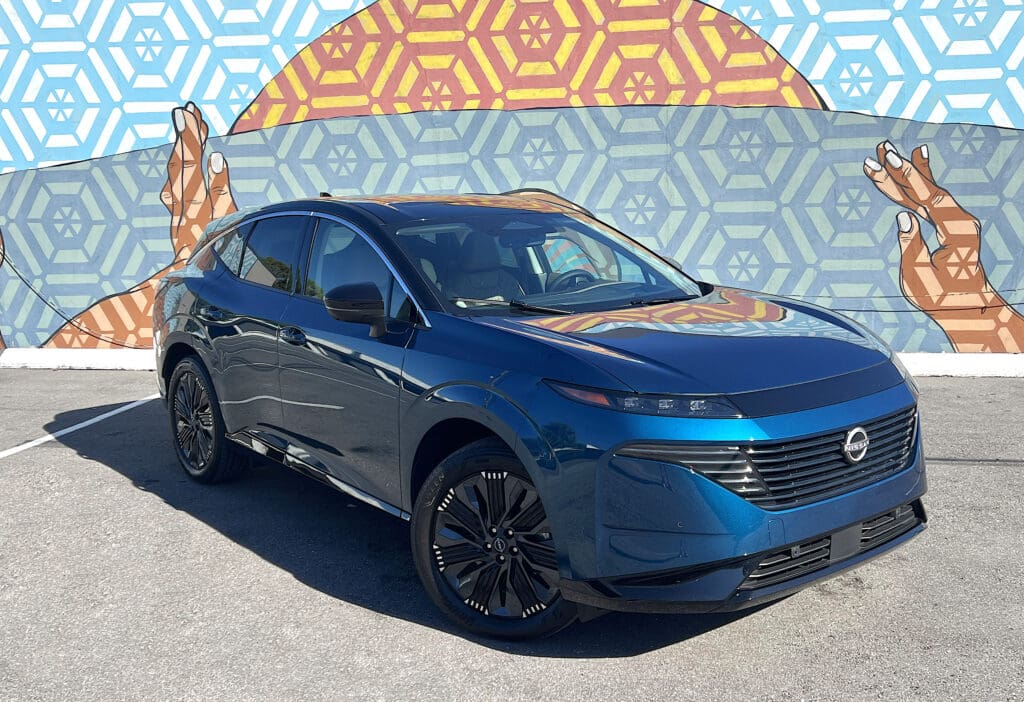
Welcome back Nissan Murano. It’s been a while. For a moment there, we thought you might be going the way of Blockbuster Video, Stein Mart and McDonald’s Fried Apple Pie. Back in the early 2000s when the cute-ute crossover hit the showrooms, it was the compact, affordable SUV to have. It came with a silky-smooth 3.5-liter V6 under the hood was just like the one used in the 350Z two-seater. But after plenty of regular facelifts, updates and new models – remember that stylistically-challenged Murano CrossCabriolet – after 2016 it all went quiet. Rogue and Pathfinder got all the love, Murano was pretty much forgotten. Earlier this year however, Nissan pulled the wraps off an all-new Murano with a bold, head-spinning design, lots of new tech, and a classy interior with lots of upscale touches. Best of all, Nissan didn’t get greedy with pricing. The base, yet nicely-equipped Murano SV kicks off at just $41,965. Step up to the SL with its standard panoramic sunroof and 10-speaker Bose stereo stickers for $48,055. For plenty of glam, splurge for the high-falutin’ Platinum flagship that I’ve just spent a week driving. It’s all glove-soft, quilted, semi-aniline leather, heated, cooled and massaging front seats, heads-up display and cool-looking 21-inch alloys. All for $51,095. Did I mention the customizable 64-color interior lighting? I loved the pinkish neon. Very Barbie. And this is one terrific-looking compact crossover that definitely puts the “sport” in sport-utility. The front-end styling is a real head-turner with its air-gulping intakes, skinny LED headlights and stack of thin, horizontal LED running lights at each side. Love that swoopy roofline too, that looks like it was modeled from a rolling wave. The roof curve is nicely accentuated with a swoop of brushed metal. There’s equal visual drama at the rear with an LED light bar spanning the entire width. The Platinum model also gets a retro-style two-tone look with a black roof contrasting with our tester’s blue-green body color that Nissan calls Aurora Blue Metallic. Overall, this latest Murano is pretty much the same size as the outgoing version, though it’s a welcome 2.6 inches wider for more interior space. Sizewise it’s still around 10 inches longer than Nissan’s best-selling Rogue. Climb aboard and you’re in for a treat. Like before, it’s a two-row cabin with seats for five and no shortage of kneeroom and headroom for those in the back and generous luggage space. There’s a huge focus on quality as well, with lovely perforated leather seats, nice dark wood elements, and high-quality plastics. At first glance you might think you’re sitting in an Infiniti rather than a Nissan. A big change with this latest Murano is the switch from that previous 3.5-liter V6 to a more modern 2.0-liter turbocharged four-cylinder with the variable-compression tech used in Infiniti models like the Q50 crossover. I was a big fan of the old Teflon-smooth V6, and this new four-cylinder is a bit of a compromise by comparison. Its max power of 241-hp is down 19 horseys, but it does pack a more usable 20 extra pound-feet of torque. But accelerating off the line, or punching out of an on-ramp, and the turbocharger on the new engine takes its sweet time to respond making the performance feel dull. Zero-to-60 acceleration takes a just-OK 7.2 seconds. It constantly feels like it needs Red Bull. Thankfully, however, Nissan jettisoned the previous CVT continuously-variable transmission, replacing it with a proper, smoother-shifting nine-speed automatic. This so-so power delivery is balanced out with the new Murano’s vastly-improved, electrically-assisted steering which is a joy to use in both city traffic and through the curves. Firm yet bump-absorbing suspension makes for a smooth ride too. And the new Murano’s upscale, luxury image is matched by the hushed refinement and silent running of that four-cylinder. Cruising at 75 mph on I-75, there’s hardly a murmur from under the hood. So welcome back Nissan Murano, it’s been worth the wait. This latest version has a lot to offer and makes a compelling choice in this packed mid-sized crossover segment of the market.
Super Coupe: Mercedes-AMG CLE 53 Coupe
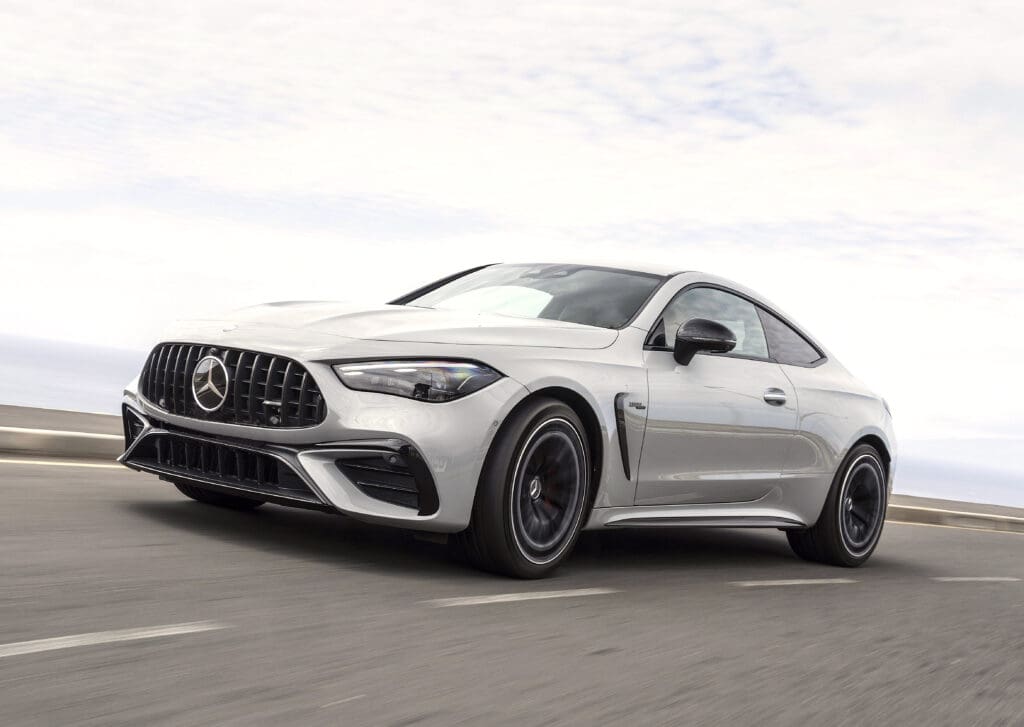
Dr Jekyll, meet Mr Hyde. Both co-habit very nicely in Mercedes’ feisty new AMG-tuned CLE 53 Coupe. The genteel-mannered Mr Hyde persona comes out in the CLE’s hushed refinement, its creamy-smooth delivery of all 443 galloping ponies, and the serene manner it can cruise at triple-digit velocities. All it takes to unleash the bad-boy Dr Jekyll however, is a twist of the AMG Dynamic drive mode knob to select Sport+, followed by a quick step on the gas. Holy-super-cannoli. That mighty 3.0-liter six-cylinder turbo with electric assist takes a big gulp of air, then roars like Mufasa in The Lion King followed, very rapidly, by all hell breaking loose. Click your iPhone stopwatch and you’ll see the mighty Merc catapult from standstill to 60 mph in under four seconds. That’s quick. And it won’t stop catapulting until the computer is calling game over at 155 mph. By which time you’ll be grinning like Julia Roberts in Pretty Woman with your adrenaline-jolted heart pounding like a John Bonham drum solo. This is the AMG CLE 53 Coupe, simply one of the coolest two-door sports coupes money can buy. Talking of money, think $74,300 base, or $85,000 very nicely loaded. If you’re not up on your Mercedes nomenclature, the CLE came about when the three-pointed star took the C-Class and E-Class coupes and dumped them in the automotive blender to create one model. Model choices include the starter 255-hp CLE 300 from $59,550, or the $69,000 CLE 450 with 375 hp. But if you have the need for speed, it’s the AMG-massaged CLE 53 you’ll want. For convertible lovers, you can also get the CLE as a wonderful droptop, also available as a CLE 300, CLE 450 or CLE 53. Choices, choices. Of course, you could go for performance with practicality and fall in love with the outrageous AMG E 53 Hybrid sedan with its towering 577 hp – yours for $89-grand. But that’s a four-door family sedan, not a sexy two-door coupe. And see the CLE 53 Coupe in the metal and it’ll make your heart swoon like watching Kate and Leo on the bow of the Titanic. Just look at the thing. From that oh-so-long hood with its twin power domes, the shark-nose front end with that oversize grille, to those air-gulping intakes. Those bulging fenders? They look a lot like Chris Hemsworth’s biceps. But it’s that swooping, arching, ski-slope roofline that sets it apart. That, and the drama-filled rear end, with that cute tailgate spoiler, quartet of oval tailpipes, and rear fender air vents. This is the view most other road users will see as the Benz sweeps past. Climb aboard and it’s all Mercedes-AMG body-hugging front sports seats, a super-thick, flat-bottom steering wheel, and acres of carbon fiber trim. Go wild and opt for our test cars’ lipstick red and black Nappa leather interior for some serious bling. Yes, there are rear seats for two which are actually adult-sized, though clambering back there is a challenge. Getting out is even worse. Kids though should have no problem. One press of the oversize start button ignites what is without doubt the CLE 53’s party piece, that 3.0-liter turbo-six. It’s a hybrid in that it has a 48-volt starter-generator that can add an extra 23 hp and 151 lb-ft of torque at lower engine speeds. This, together with the electric auxiliary compressor, adds extra oomph before the turbocharger spools-up, for rapid off-the-line sprints and power jolts when passing. Coupled with the CLE’s nine-speed automatic and standard 4Matic all-wheel drive, it makes this 53 Coupe an absolute rocketship on the straight and narrow, and super-responsive through the curves. To explain all the performance technology that comes with this AMG would require more words than War & Peace. But it all comes together to deliver one of the most rewarding, satisfying, thrilling, driving experiences you can get. Here is a car that steers beautifully, carves curves like it’s running on tracks, has poise and balance and, in comfort mode, rides surprisingly smoothly. And it’s so much fun knowing that the good Dr Jekyll is just a button-push away.
Vantage Point: 2025 Aston Martin Vantage coupe
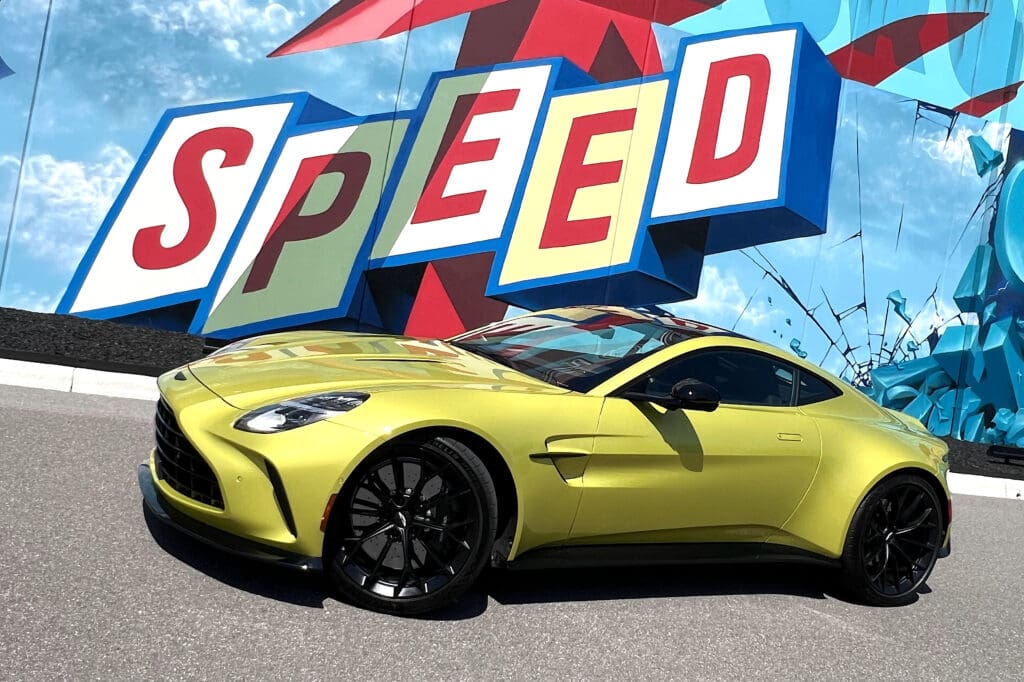
Channeling that classic Tom Cruise line from the original Top Gun movie: “I feel the need. The need for speed”. To feel the need, simply dial-in sport+ drive mode to add a triple shot of Lavazza espresso to the 4.0-liter twin-turbo V8. Now foot to the floor. And brace, brace. It’s not the off-the-line thrust that will release a tsunami of adrenaline and send your pulse-rate into hyperdrive. Though zero-to-60 in 3.4 seconds isn’t exactly hanging around. No, it’s the ferocity of the mid-range, slingshot-out-of-the-on-ramp, surge that will clench your jaw, tingle your fingers and have you uttering expletives like Gordon Ramsey on Kitchen Nightmares. The source of all this mind-warping forward motion is Aston Martin’s divine new Vantage coupe that’s just had a major makeover to transform it into a true Porsche 911, Mercedes-AMG GT combatant. While the bones of the Aston are pretty much unchanged from the 2017 original, continuous evolution has kept it as a major player in the supercar-lite game. But this 2025 version takes the Vantage to a whole new towering level in terms of power, performance, handling, and swooning looks. Take that mighty V8. It’s still essentially the same motor supplied by Mercedes-AMG and used in the AMG GT. But it’s been extensively tweaked by Aston engineers who endowed it with bigger turbos, modified camshaft profiles, a higher compression ratio and improved cooling. The result? It now makes an impressive 656 hp at 6,000 rpm – up 128 hp from its predecessor. Max torque? That soars by 85 lb-ft to a stump-pulling 590 lb-ft. Peterbilt 18-wheelers have less muscle. The company’s handling wizards also worked their magic to help the Vantage sweep around curves like a Hot Wheels slot-car. It gets a new set of Bilstein adaptive dampers similar to those in Aston’s latest DB12 and Vanquish rocketships, and even more precise electric steering that wouldn’t seem out of place on Fernando Alonso’s Aston Martin F1 racecar. Add to this, additional stiffening for the bonded-aluminum monocoque structure, a wider track, weight management that now gives a perfect 50:50 front/rear balance, and super-sticky Michelin Pilot S5 tires developed specially for the new Vantage. Talking of wide track, gaze for one sweet moment at the car’s jaw-dropping new shape. Yes, it’s evolved from that 2017 original, but it feels totally new. The signature Aston grille is now a whopping 40 per cent bigger, and capable of channeling around 30 per cent more cooling air into the engine bay. Gorgeous new slender LED headlights too, and the kind of bulging fenders surely modeled after Chris Hemsworth’s biceps. Yet arguably the most compelling feature of this new British beefcake is its interior. Gone is the unruly ergonomic mess that was the previous Vantage. Taking its cues from the recently refettled DB12, it gets a 10.25-inch touchscreen display integrated in the center console, with Apple and Android connectivity. Gone too is the eccentric push-button gear selector, replaced with a more conventional, more intuitive, single-lever shifter. What hasn’t changed is the quality and craftsmanship seen in the cut and stitching of the glove-soft Bridge of Weir leather, the lovely satin metal trim, and carbon fiber weave. And those front seats are perfect thrones for some spirited driving, supporting and cosseting in all the right places. Thankfully Aston resisted the temptation to squeeze-in vestigial rear seats incapable of accommodating any human form. Instead, there’s a decent amount of luggage space under that lifting glass tailgate. Out on the road our Cosmopolitan Yellow Vantage tester drives like a bolt of white lightning. The overall feel is firmer, tauter, more responsive, more aggressive. Without a race track to test the cornering limits, every backroad curve feels as if those 21-inch rims are simply running on rails. Instant acceleration accompanied by that sonorous, throaty exhaust? Just addictive. $200,500 is the price of entry for this new Vantage coupe – the newly-launched Vantage Roadster costs around $15,000 more. Start checking a few options boxes however and it’s easy to hit the $270,400 sticker of our test car. That paintwork alone adds $14,100. But while this new Vantage is essentially the “starter” Aston, to me it’s the most appealing in the range, with its sublime looks, breathtaking performance, truly dynamic character, all in this more compact package. That need for speed? Definitely satisfied.
Smooth Operator: 2026 Buick Enclave Avenir
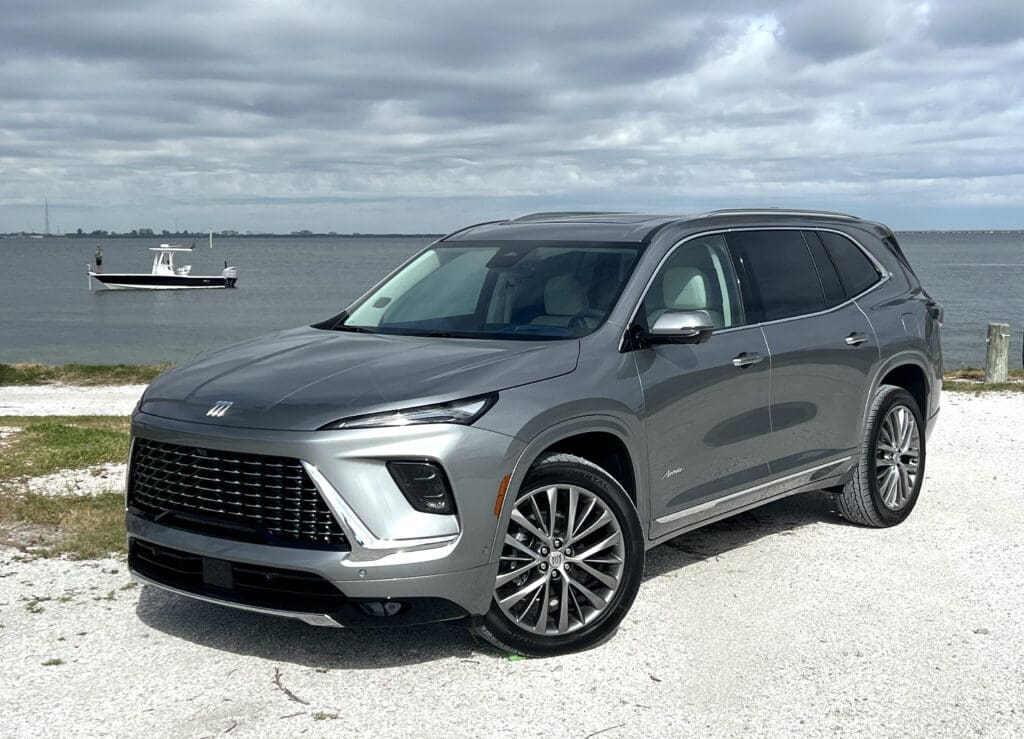
For all you Trivial Pursuitists out there, the word Avenir describes a geometric sans-serif typeface designed by one Adrian Fruitiger back in 1987. Google him, he’s famous. It’s also a French bon mot meaning the future, as in “regarder vers l’avenir”, or look to the future. If you’re more into automobiles than sans-serif typefaces and French vocabulary, you might know that since 2017, Avenir has been Buick’s designation for its fanciest-pants, most-bells-and-whistles models. The badge sits proudly on the newly-redesigned, flagship Enclave Avenir three-row SUV I’ve just spent a delightful week piloting around Tampa Bay. In luxury SUV circles, it’s considered something of a bargain. In a peer group that includes the likes of Lincoln’s Aviator Black Label, Acura’s MDX A-spec, the Genesis GV80 and Lexus TX, the Avenir is a steal of sorts at $61,495. Even adding a jingle of bells and whistles, including nice-to-have features like all-wheel drive ($2,000) and self-driving Super Cruise ($3,015), our loaded tester topped-out at $66,510, undercutting all the opposition. Of course you can get a new Enclave for less, with the entry Preferred model starting at $48,095 and the Sport Touring, from $51,595. All Enclave versions share their underbodies and greasy bits with Chevy’s Traverse and GMC’s Arcadia. But if you’re looking for luxury and a whole lot of smoothness and refinement, the Enclave Avenir is the one to have. Climb aboard and it’s truly like stepping into a Bentley. The dash and steering wheel are a lovely shade of rich royal blue, complimented by seats slathered with light-gray perforated-and-paneled leather with contrasting blue piping. Those front pews are heated and cooled and will massage your latissimus dorsi muscles with the skill of a Swedish rolfer. In the second row, chill in the super-supportive captain’s chairs, which fold and slide forward for third-row access. Slide them back for limo-like legroom. This being Buick’s largest SUV, kneeroom in those rear rows is plentiful. Even tallish adults won’t complain too much about riding in the cheap seats. And the cabin feels bright and super-airy, courtesy of the big panoramic glass roof. Up front, the driver gets to control the world via a new 30-inch curved touchscreen display that floats in front of the dash. It runs GM’s latest Google maps, as well as wireless Apple CarPlay and Android Auto. The graphics are iPad Retina Display sharp. Design-wise, the Avenir’s styling is nicely distinctive, with that bold front end dominated by a deep grille, wafer-thin headlights, lots of shiny chrome accents, and big 22-inch alloys. That said, don’t expect to spin heads cruising through Olde Hyde Park or along St. Pete’s Beach Drive. It’s more stealth than swagger. There’s also big news on the power front. In last year’s major makeover, Buick ditched the Enclave’s previous 310-horse 3.6-liter V6 in favor of GM’s turbocharged 2.5-liter inline-four packing 328-hp and 326 lb-ft of torque. If there’s a weakest link with the new four-cylinder it’s that it’s just too vocal. Hit the gas and as the revs rise, so does the thrash and churn, which does nothing for the Avenir’s luxury image. Yes, it packs the power to make the Enclave plenty zippy enough, scooting from zero to 60 in around seven seconds. The four-banger also has decent mid-range muscle for safe and secure passing, and on the Interstate will cruise serenely at the speed limit. Just don’t rev it hard. Through the curves, sporty isn’t in its vocabulary, and that’s perfectly OK. The aim here is comfort, smoothness and refinement rather than nimble handling. Yes, there’s plenty of grip, but the numb steering gives little in the way of feedback. I also question the merits of spending $2,000 to get all-wheel drive. Buick might even agree, as the system has to be engaged manually by tapping a button on the dash. You heard that right; it doesn’t engage automatically when things get slippery. The focus here is on delivering a smooth, cloud-like ride where the adaptive suspension soaks-up lumps and bumps like Brawny Man absorbs kitchen spills. Yes, there’s so much to love about this latest Enclave Avenir, especially if you like your SUVs smooth and refined. Leave the sportiness to the Europeans.
American Luxury: 2025 Lincoln Navigator Reserve
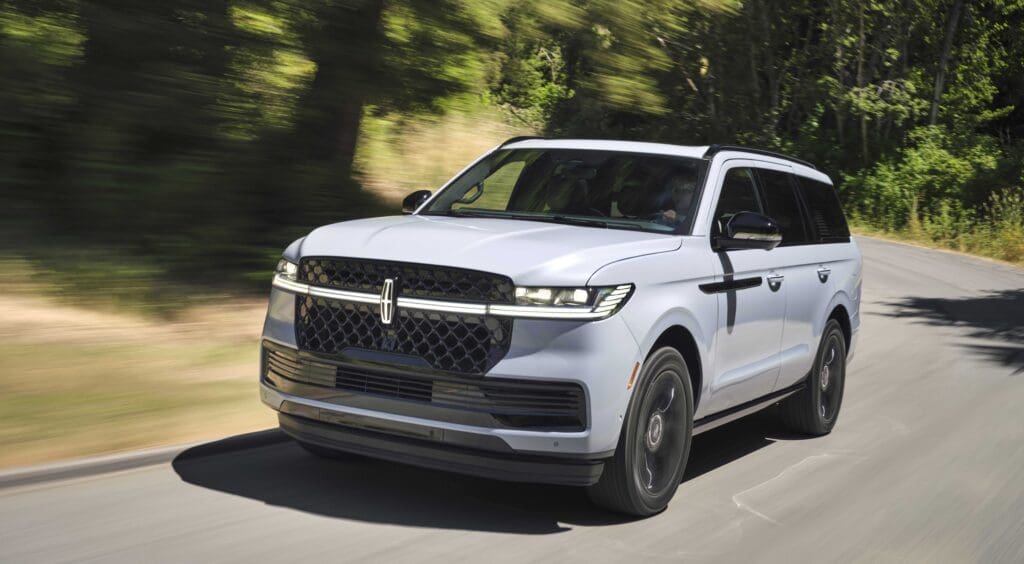
Size matters when you need to transport six of your closest friends in style, haul home the contents of an average-sized Home Depot, and tow a boat the size of a Disney cruise ship. That’s why we love Lincoln’s XXL-sized Navigator. Introduced back in 1997, this gussied-up, chrome-laden version of Ford’s Expedition 4×4 just gets better with age. It’s also just had a major makeover to take it into its fifth generation, slathering-on more luxury, more style and the kind of cool features we used to get from a Sharper Image catalog. Did I mention it comes with a new, mega-wide, 48-inch curved glass digital display that spans the entire width of the dash? Or a 28-speaker Revel Ultima audio system that, with the right AC/DC track played loud, can cause eyeballs to vibrate? And take a look at that new, not-square, not-round steering wheel. I’m told the technical term is ‘squircle’. The word ‘quirky’ also comes to mind. Less dramatic is the ‘Gator’s new styling, which is more in the evolution-less-revolution department. Surprisingly, nearly every body panel is new, with only the doors carried over from the previous model. Headlining features include a complete new front end, with a bigger, bolder grille and full-width LED lightbar streaking across the nose. Lock or unlock the big Lincoln and you get a cool light show that’ll wow the neighbors. At the rear there’s another full-width lightbar and a tailgate, that’s now split 7/8ths at the top, and a smaller 1/8th section at the bottom. That makes for a perfect game-day tailgate seat, or a barrier to stop your cans of beans rolling out. What hasn’t changed is the Navigator’s gargantuan dimensions. The standard-length version measures 210 inches bow to stern, and rides on a 123-inch wheelbase. Need even more interior space to transport a few pro basketball players, there’s the L version that stretches to a massive 222 inches overall. There are Mayflower moving trucks smaller. As we know, Navigators don’t come cheap, and this latest version kicks off with the Reserve at $99,995 that doesn’t include the hefty $1,995 destination charge. There’s also a new Reserve with stealthy-black Jet Appearance Package for $103,495. The swanky Black Label starts at $116,995, with the stretched L versions all costing roughly $3,000 more. I just spent a week captaining this gray mist Navigator Reserve with the black-wheeled Jet Package. Total MSRP, $108,360. As before, there’s only one powertrain on offer. Carried over is Ford’s twin-turbo 3.5-liter V6 that cranks out a healthy 440 horseys and 510 lb-ft of torque. All that is channeled to the wheels through a 10-speed automatic with all-wheel drive as standard. Yes, it still drives like the 6,ooo-pound, body-on-frame leviathan it is, with a mighty 510 torques on tap, and a major focus on creamy smoothness and hushed refinement. The way it surges off the line under full throttle, reaching 60 from standstill in a mere 5.3 seconds, with just the merest rumble from under that mile-long hood, is still its party-piece. No, it’s not a Mercedes GLS or BMW X7 in the way it carves curves. Though its standard adaptive dampers, surprisingly precise and well-weighted steering, and controlled body roll make it handle way better than a truck this big ‘n tall should. And the new interior is a standout, with leather-clad Barcalounger-style front seats that massage, heat and cool and power adjust up to 30 ways. But there are one or two truly annoying features that fall into the gimmicky, who-thought-that-was-cool department. Want to adjust the door mirrors, pedals, or the steering column? You have to move your pinkie around a teeny steering wheel pad. Worse still, if you want to adjust the angle of the air vents, you have to take you eyes off the road, look down at the too-low center console screen and mess with on-screen controls. Just ridiculous. And dangerous. Niggles aside, this mighty new Navigator is even more luxurious, even more capable, and even more of a rolling sanctuary than ever. Perfect for navigating life’s highways.
Stealth Mode: 2026 Hyundai Ioniq 9 EV
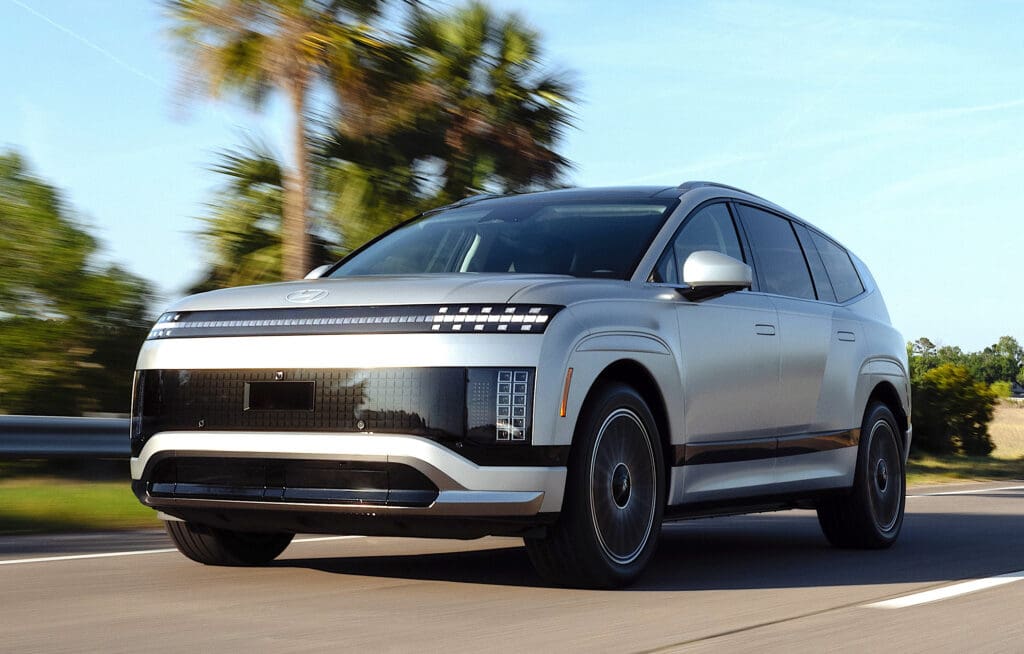
Kittens snoozing in a basket. The inside of a bank vault at midnight. Marcel Marceau doing karaoke. All as hushed and silent as can be. Yet none of these compare to Hyundai’s new, all-electric Ioniq 9 three-row SUV cruising on I-75 at 75 mph. It’s like driving while wearing Bose noise-canceling headphones. With earplugs. The folks at Hyundai have done a spectacular job at heightening the hush by cramming every orifice with sound-deadening padding, adding acoustic glass, incorporating active noise-canceling acoustic trickery, and triple door seals. I’ve driven my fair share of Rolls-Royces and Bentleys over the years, but this Hyundai EV is more hushed, more quiescent than them all. Silence is golden, right? Quite rightly, it’s the new flagship of the Hyundai auto making juggernaut, a step above the Palisade and a head-to-head rival to the likes of Tesla’s Model X, Rivian’s R1S, Cadillac’s Vistiq and even the box-on-wheels Volkswagen ID.Buzz. If there’s a two-ton elephant in the room however, it’s price. While a base Ioniq 9 stickers for $60,555 including a lofty $1,600 destination charge, the top-of-the-line Ioniq 9 Performance Calligraphy Design AWD I’ve just spent a week piloting, came with a $79,540 price tag. Yikes, $80-grand for a Hyundai. And, courtesy of that Big Beautiful Bill, the much-appreciated $7,500 federal EV tax credit for this Georgia-built EV will vamoosh at the end of this month. Yet one drive and somehow the lofty sticker seems kinda justified. Here is simply one of the best family haulers around, with its massive interior space, up to 335-mile range, and head-spinning design inside and out. Just look at the thing. It’s as if a station wagon, low-riding SUV and family-friendly minivan were thrown into an automotive blender and this is what came out. I love that swept-back windshield, the funky wheel arches, and blunt front end with its multitude of pixel-like LED squares. One click of the key fob lock or unlock button, and they deliver a light show worthy of the Eiffel Tower at night. Inside it’s just cavernous. So much of the focus here is on the second-row seats – either twin, biz-jet-style captain’s chairs or a bench – with stretch-out legroom and towering headroom. Even the third row is adult-sized. Up front, the dashboard features a pair of 12.3-inch screens set under a single curvy glass panel. And, round of applause please, there are real buttons, knobs and switches to control the main features. As you’d expect of an $80-grand Hyundai flagship, the quality of materials, the fit and finish, and the design are top notch. And to drive an Ioniq 9 is to love it. While the base S model comes with a single 215 hp electric motor, rear-wheel drive, and a 335-mile range, our Calligraphy Design tester is the one you’d want. Here you get twin motors to deliver all-wheel drive and a combined 422 hp and honking 516 lb-ft of torque. While range drops to a claimed 311 miles, the bonus is slingshot acceleration, with 0-to-60 mph sprinting in a mere 4.9 seconds. Hyundai has also recently adopted the NACS charging port so you can supposedly charge your Ioniq 9 at any Tesla Supercharger station. My own charging experience, however, proved more frustrating. Connecting to our apartment building’s ChargePoint charger, courtesy of the Ioniq’s provided adapter, and the Hyundai just wouldn’t accept the charge. Then, on a road trip, when I tried to use the Tesla supercharger behind the Whole Foods in Sarasota, again the Hyundai wouldn’t take the charge. A stop at the friendly Sarasota Hyundai dealer drew a “but it should work” response. Only the 350kW Electrify America station at the Ellenton Mall would connect and deliver a charge. At a hefty cost. Charging woes aside, this new Ioniq 9 is an impressive addition to the EV family with pace, space and a very cool face to set it apart.
Mini-Me: 2025 Mini Cooper S Convertible
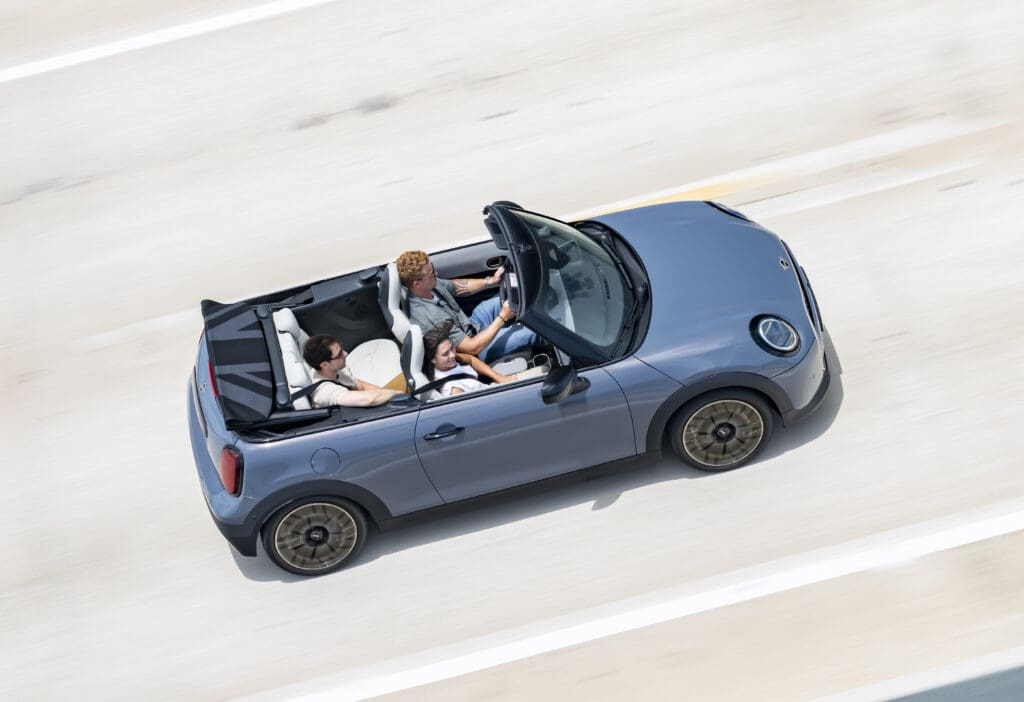
Did you feel it? That frisson of chill in the air a couple of weeks back. OK, it lasted no more than a day or so, but I swear the temps plummeted to maybe 88. Down from the usual cauldron-like108. Oh, and that breeze, wafting in from the north. Just heaven. It was enough to have ABC Action News’ Denis Phillips twanging his suspenders with glee. For us heat-suffering Floridians, it was a hint that fall just might be around the corner. I have my fingers poised to turn up the a/c. For me, there was an extra dose of cool-air delight as, arriving for test just in time for the big chill, was Mini’s newest Cooper S Convertible, a $40,000 bundle of wind-in-your-follicles fun, all ready for a frolic to the beach. I love Minis. Love their mini-me size. Love their go-kart driving feel and roller-skate stance. And, as a fully paid-up Brit, I naturally love their Merrie Olde England accoutrements, like the Union Jack canvas top and Union Jack rear lights. As that shag-a-delic superhero Austin Powers would say, Yeah Baby! For 2025, Mini designers have given the super-Cooper a subtle refresh. Exterior-wise, they re-jigged the octagonal grille, gave it new headlights with LED crossbars, and a new bumper to add a cleaner, more modern look. What hasn’t changed is the folding convertible top. As before, it retracts in two stages. The first part is like a sunroof adding sun and breeze to those up front. Keep the switch pressed and the top drops in a mere 18 seconds, and at speeds up to 19 mph. It closes in just 15. Top down, with all four side windows raised, there’s suprisingly little wind buffeting. But lower the windows and 75 mph on I-75 however feels a little like standing behind a 747 on take-off. My only complaint is that the switch to work the top sits high up near the top of the windshield. By the end of those 18 seconds, blood would drain from my right arm and rigamortis set in. But going topless is still the true joy of Mini Convertible ownership. A cruise along Tampa’s Bayshore, crossing the Gandy Bridge, posing along downtown St. Pete’s Beach Drive. Such fun. For 2025, the MIni Convertible comes in three flavors, each one delicious in its own way. The base Cooper comes with a 2.0-liter four-cylinder turbo cranking out an okay 161 horseys and 184 lb-ft of torque. Pricing starts at a excellent $33,950 (plus $995 destination). Our Cooper S is next up, equipped with a more feisty 201 hp and 221 torques version of the turbo-4. Pricing here starts at $37,900. With a few option, like a thumping Harman Kardon stereo and that Union Jack-stitched top, think closer to $43,000. For more enthusiastic Mini pilots, there’s the JCW, short for John Cooper Works and named after the famed British Mini tuner. It packs a 228-hp punch with 280 lb-ft of torque on tap, for more spirited performance. That one will cost you $44,600 and up. The best all-rounder to me, is our Cooper S Convertible which feels plenty lively, with 0-to-60 mph sprinting in 6.7 seconds coupled with 36-to-the-gallon highway fuel economy. Like all Minis, it has the kind of laser-precise steering that feels hard-wired to your gray matter. Just think about turning into a curve and it’ll sweep round like it’s running on invisible rails. All Minis come with a seven-speed, dual-clutch automatic which shifts with the smoothness of liquid Teflon. But there are still no paddle shifters on offer to add to the driving fun – a serious omission. Inside, the re-jigged cabin is as quirky and as much fun as ever. The big, round, pizza-sized instrument display is back, but with new, razor-sharp graphics and cool lighting. A funky new dash covering too, upholstered in houndstooth cloth. And, as before, there’s seating for four, though those rear seats are best used for short hops. And, as before, the trunk is teeny. But with fewer and fewer affordable convertibles being offered, the Mini Convertible is a true gem. Consider one now – trust me, fall is on the way.
Hybrid Love: 2025 Subaru Forester Hybrid
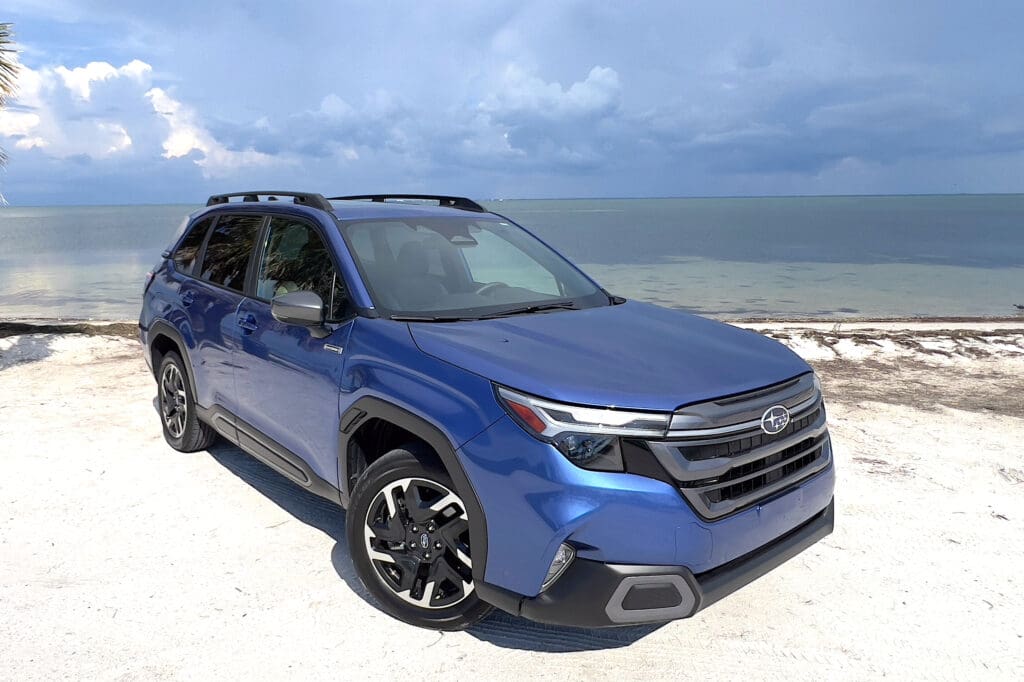
As we well know, Ms. Taylor Swift’s merry band of followers go by the collective name ‘Swifties’. And one staggering factoid is that the number of Swifties currently following the newly-engaged mega-star on Instagram totals a quite staggering 280 million. For reference, the total population of Florida is around 24 million. That’s a lot of Swifties out there. While not quite in the same league, Subaru owners, who naturally go by the name ‘Subies’, are equally passionate, loyal and enthusiastic cheerleaders. Seems they love the brand’s quirky design, those funky flat-four ‘boxer’ engines, standard all-wheel drive and Subaru’s reputation for reliability and dependability. An interesting factoid; an impressive 96 per cent of Subarus sold in the last 10 years are still on the road today. Subies definitely look after their rides. Currently top of the Subaru love chart is the beloved Forester crossover, which just got the addition of a fuel-sipping Hybrid model. Announced in February, it’s already helped propel the box-on-wheels Forester to the top of Subaru’s U.S. sales chart, overtaking the entry-level Crosstrek in the first six months of 2025. And what’s not to love? Its new hybrid powerplant adds more power, gives up to 40 per cent better fuel economy, and takes the range between fill-ups to over 580 miles. Yet Forester Hybrid models are priced from just $36,595. That’s only $1,400 more than the non-hybrid. The source of all this Subie love is the newly-developed 2.5-liter four-cylinder under the hood. It’s mated to a new, so-called Lineartronic CVT transmission that incorporates a beefy electric motor, juiced by a lithium-ion battery pack under the trunk floor. The combined output of gas and electric totals 194 horseys, which sounds a little disappointing considering the output of the regular 2.5-liter in the non-hybrid Forester is 180-hp. On the face of it, a 14-hp increase seems hardly worth the effort. But the considerable appeal of this new hybridized, all-wheel drive Forester is in the way it drives. Which is a delight. Away from a stop-light, it’s as if someone has dumped a can of Red Bull into the tank. It now scoots away like a bottle rocket on the Fourth of July. There’s a lot more oomph too when passing slower traffic, or zipping out of a tight curve. And with this new Forester Hybrid, Subaru has seemingly packed every crevice with noise-absorbing sound-deadening material. The result? The kind of silent running you’d associate with Red October in stealth mode. Add to all that, a worthwhile step-up in fuel economy. While a non-hybrid Forester averages a combined 29 mpg, this new Hybrid gets up to 35 mpg combined. Subaru also gives the Forester a 16.6-gallon fuel tank, which means that this Hybrid will go for up to 580 miles between fill ups. That’s Tampa to Miami. And back. After spending a week with this Daybreak Blue Pearl Forester Limited Hybrid tester – $41,010 or $42,825 out the door – I’d happily join the Subie cult. Much of the appeal is just how easy this Forester Hybrid is to live with. Take the body. OK, the styling looks a little on the dorky side, with that tall roof, jacked-up stance and fussy front end. But it’s a cinch to climb into, and once behind the wheel, those slim roof pillars make for terrific all-round visibility. Inside it’s an absolute cavern, with more interior space than a Honda CR-V Hybrid, Toyota RAV4 Hybrid, or Ford Escape Hybrid. Flip down that 60/40-split, flat-folding rear seat and you have more than 74 cubic feet or cargo space. That’s the size of most New York City apartments. And the rear tailgate opening is extra wide and the cargo floor nice and low for easy loading. Being more of a wagon than a traditional SUV also means that loading kayaks or paddle boards on to the roof is a cinch. It all adds up to a multi-functional, versatile, economical and yes, totally lovable sports wagon. Time to become a Subie?
Ferrari’s Roma Spider is one Bella Macchina
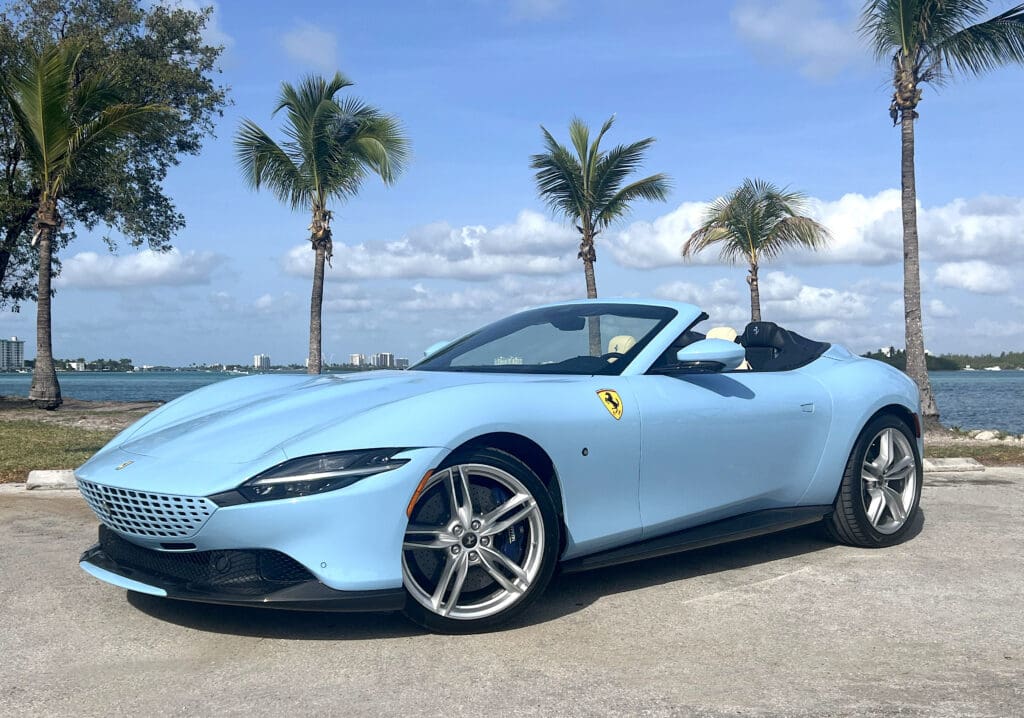
Azzurro La Plata. In case you’re wondering, it’s the name Ferrari gives to this breathtaking shade of powdery baby blue adorning the new 612-horsepower Roma Spider super-convertible. Now driving a Ferrari, any Ferrari, guarantees endless wows, waves, and raised thumbs from fellow motorists. But a Ferrari painted Azzurro La Plata will ramp-up the adulations to an eleven. I lost count of the “Cool color, man” or “Love that blue” responses the Roma garnered. It’s a fact that most new Ferraris these days come out of the factory painted iconic Rosso Corsa racing red, also known as “resale red”. But a Roma Spider, in this softest of soft blues, was perfect for a recent top-down cruise from Miami’s South Beach, up the avenue they call A1A, or should I say the Jimmy Buffet Memorial Highway. No, high speeds weren’t involved in this test drive. Nor was ten-tenths handling around a snaking race track. This was just an early-morning adventure to soak-up the spirit of the Prancing Horse, and this, the first front-engined, soft-top Ferrari to debut since the legendary Daytona Spyder was introduced in 1969. Since the company quietly dropped the Roma Coupe last year (there’s a new version called the Amalfi coming soon), the Spider convertible now provides the first rung on the Ferrari ownership ladder. With prices starting at $277,970 however, just don’t call it the base model. Here is a different kind of Ferrari than its mid-engined berlinetta brethren, the screaming, hip-high 296 and SF90 and thundering F80 supercar. No, the Roma Spider is, to my eyes, the prettiest car Ferrari currently builds, a car that’s more about la dolce vita lifestyle than ultimate performance. Until the Roma Spider came along, Ferrari had favored metal-roofed retractable hardtop convertibles, like the Portofino and California before it. But for some reason it decided to go retro with a five-layer canvas roof. Great decision. At the push of a button, the top descends in a mere 13.5 seconds, and at speeds up to 35 mph. Another button levitates a funky wind deflector over the rear seats that does a fine job of quelling in-cabin turbulence. Even at 75 mph on I-75, the Roma keeps bad-hair days in check. Of course, folding the top lets you take-in the full acoustic wonder that’s the Roma’s twin-turbocharged 3.9-liter V8 squeezed tight under that curvy, power-domed hood. It packs the muscle of a team of Clydesdales, cranking out 612 horseys and 561 pound-feet of torque, an impressive 80 per cent of which is available below 1,900 rpm. Oomph is delivered courtesy of a rear-mounted, eight-speed dual-clutch transmission controlled automatically, or via lovely elephant-ear, carbon-fiber paddle shifters. Tap the still-weird, haptic “start” button on the steering wheel, pull back the paddle to engage first gear and the Roma slingshots away. If you have the need for speed, a full-bore, off-the-line blast would get you from standstill to 62 mph in a heart-palpitating 3.4 seconds, and on to an equally heart-arresting 200 mph top speed. But the Spider is content to glide along A1A with just the most sonorous of V8 burbles wafting up from that quartet of tail pipes. While neck-snapping performance is just a paddle-shift away, I loved the smooth-riding, grand-tourer vibe of this glorious roadster. Part of the joy is down to the Roma’s laser-precise, electric-assist steering which feels like it’s hard-wired to your gray matter. Find yourself a twisty back road – hard, I know here in the Sunshine State – and the Spider simply spears around as if it’s running on invisible rails. Inside, the cabin looks like it came straight out of a Ferragamo design studio, with its gorgeous leathers, exquisite stitching and lovely detailing. The chunky steering wheel is a delight to grip and less complex than the helm on the old Roma Coupe. That said, the rocker buttons for the turn signals never fail to irritate. Quibbles aside, this new Roma Spider is, without doubt, my favorite new Ferrari. I love its dual persona of elegant, refined, open-top grand tourer and super-quick, super-agile supercar. But then again, it had me at Azzurro La Plata. Color me smitten.
City Slicker: 2025 Lexus UX 300h F Sport Handling
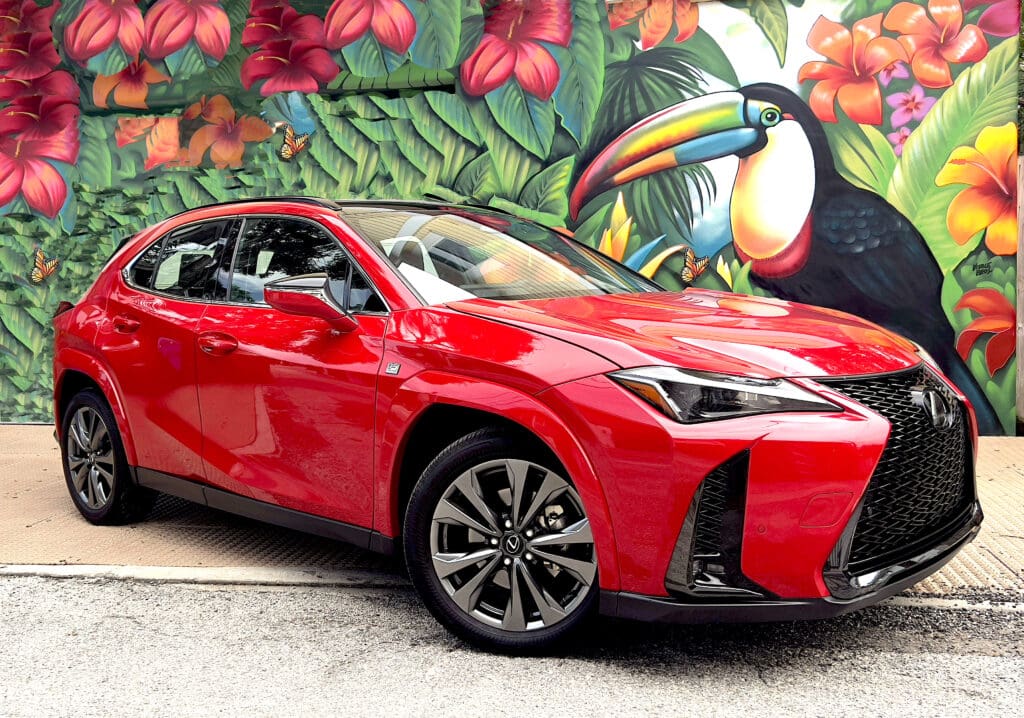
If, like me, you think Toyota’s latest Prius has all the visual appeal of a Rubbermaid door wedge, you’re going to love Lexus’ new UX 300h hybrid crossover. Here is a cute and versatile mini-SUV that, for 2025, comes with the very same proven hybrid powertrain that’s in the low-slung Prius. That means Toyota’s latest fuel-sipping 2.0-liter four cylinder gas motor combined with a pair of beefy electric motors up front giving a combined 196 horsepower. The big change from last year’s UX is an upgrade to a new lithium-ion battery pack, replacing the previous, old-school nickel-metal hydride unit. It means an increase in horseys, from 181 to 196. In addition to a bit more power, performance and fuel economy also improved. A bit. Zero to 60mph sprinting now, according to Lexus, takes 7.7 seconds – half a sec quicker. And, according to the folks at the EPA, combined mileage is now 43 to the gallon, up from 42. Every little helps. These numbers alone justified the badge change from last year’s UX 250h to this new UX 300h. Whoop. As the entry model in the Lexus line-up, the UX is compact in size, though it still looks nice and sporty with its swoopy roofline, swept-up waistline, and bold front end with that trademark, love-it-or-loathe-it Lexus spindle grille. Base pricing kicks off at under $40,000, undercutting pretty much every other sub-compact luxury crossover, which include the likes of Audi’s Q3, Volvo’s XC40, BMW’s X1 and Mercedes’ GLA. Step up to the fancier UX 300h Premium for $41,235, or $42,805 for the all-wheel drive version. Or go sporty with the $41,985 F Sport Design version. I’ve just spent the week wrangling the top-of-the-line F Sport Handling version, with front-wheel drive, adaptive suspension, bolstered F Sport front seats, a 12.3-inch center touchscreen, and glowing Redline red paint. Yours for $46,500 or $48,900 loaded. Prefer an all-wheel drive version, which entails adding an extra electric motor to the rear axle, will add $1,570 to the sticker. Think $50-grand. Here the UX Premium seems the better deal as it looks pretty much the same as the F Sport, and has the same performance. Only the adaptive suspension, which sharpens handling a tad, might justify the $4,515 premium. Pricing close to $50,000 certainly pushes the Lexus into BMW X1 and Mercedes GLA territory, which are both superior in performance, handling and refinement. That 2.0-liter Prius engine powering the UX certainly wins no awards for smoothness and aural delight. Rev it hard and, together with the standard CVT continuously-variable automatic transmission, it drones like a leaf-blower on wide-open throttle. Worse still, fake engine noise is piped into the cabin through the speakers. As in the Prius though, that new battery pack and strong electric motors give a worthwhile helping hand to scoot the Lexus off the line, and punch out of freeway on-ramps. And that adaptive suspension, especially in Sport mode, plus nicely-precise and well-weighted steering, does make the Lexus feel nimble and agile through the curves. As a lover of small cars, the UX’s compact dimensions and slightly raised-up driving position also makes driving around town a joy. See that tight parking spot, and it sweeps right in. Talking of “in”, slide into those body-hugging F Sport front seats, get a grip of the salami-thick F Sport wheel, look down at those sporty aluminum pedals, and this new UX 300 makes you feel as if you’re on the starting grid at Daytona. Everything is typical Lexus quality, and while the heated and ventilated leather front seats with their racy red stitching, look and feel great, there’s no relief from the all-black materials. Sitting inside is like being down a Kentucky coal mine. But the graphics on the 12.3-inch touchscreen and matching 12.3-inch instrument display are pin-sharp, and the optional head-up display – pricey at $900 – is worth every cent. While space up front is excellent, it’s less so in the back where both kneeroom and headroom are on the tight side. That sloping rear window, and high load platform, also reduce luggage space. Thankfully the split-folding rear seats are easy to drop. Despite all this, this latest UX 300h hybrid, especially in F Sport Handling form, is a fine all-rounder and a serious player in this competitive sector of the market. Certainly no one is going to confuse it with a Prius.
Scout’s Honor: Flat out in Scout’s new $6.8 million 670 LXS
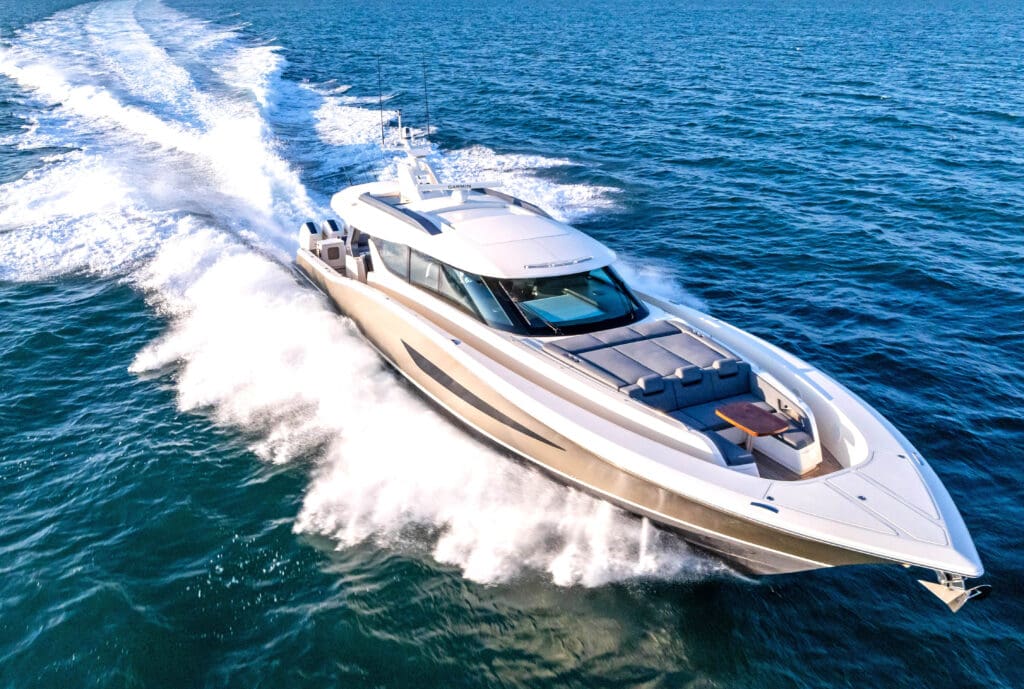
We’re rocketing. Thirty, 40, 50 miles an hour, that towering bow slicing through waves like a box-cutter through packing tape. And then there it is, a big 6-0 flashing-up on the Garmin screen. Sixty miles an hour flat out is an astonishing velocity for any 67-foot, 60,000-pound, high-luxury express cruiser, even one with 3,000 horsepower on tap. Those 3,000 horses, however, are delivered not from a pair of muscley diesels or big-block V8s, but from a quintet of 600 hp Mercury Verado V12s outboards. Yes, outboards, on a 67-footer. Which makes this brand new, South Carolina-built Scout 670 LXS I’m piloting, the world’s largest outboard-powered boat on the planet. It’s arguably one of the most stunning too. See it tethered stern-to at Sarasota’s Marina Jack, it looks slim and slender, lean and mean. And a mile long. Yes, it has the trademark flared bow and swooping profile of Scout’s 530 model. But that swept-back windshield, shallow side windows and endless hardtop give it a sleek, super-low-profile stance. Step aboard and the teak-decked cockpit shows that it’s perfect for entertaining a crowd, or some serious deep-sea fishing. To pull-in that grouper, or for the kids to do swan dives, there are power-descending terraces on each side that stretch the beam from 16 feet to almost 20. But perhaps my favorite spot on the boat, apart from the helm, is the covered dining/entertaining area just north of the cockpit. It’s shaded and feels cosy and protected by the substantial hardtop supports. It’s air conditioned too. That and the fun forward bow lounge reached by impressively wide and deep walkways. Here there’s a huge sun pad with tilt-up backrests and U-shaped sofa with seating for six. Just the perfect place for sunset cocktails. Below decks, the 670 offers roomy accommodations in three cabins. There’s an ensuite master in the bow, a guest double on one side and a twin-bed cabin on the other. They’re separated by a lounge area with sofa, TV and small galley. My guess is that few owners will bother to spend the night aboard, but use the space for naps, movie watching, showers and cooling-off in the air-conditioned comfort. Time to see what she can do. Casey Collias, Scout’s top demo captain is on hand to show me the ropes. And right now the ropes are being released for our afternoon of burning gas around the disappointingly calm waters of Sarasota Bay. Maneuvering out the dock is a breeze courtesy of a powerful bow thruster, stern thruster and joystick control for the five Verados. A tap of a button also engages the Skyhook digital ‘anchor ‘ that uses GPS to keep the boat in place while Casey pulls in fenders. Single-handing the Scout wouldn’t be a problem. Out into the bay, hard on the throttles, and the 670 rises effortlessly up on to the plane like a Gulfstream on take-off. Then we’re off, hitting 50 knots, or 57 mph, in less than a minute. What’s absolutely remarkable here is the utter lack of noise. Those Verado V12s are renowned for their stealthy silence, but in the Scout it’s otherworldly. Now comes the wild part. Spin the wheel hard over at the aforementioned 57 mph – crazy I know – and the 670 just leans, bites hard, and corners just like a Porsche. And slamming into its own three-foot wake is a non-event. While the quartet of Verado outboards deliver truly impressive performance, the other party trick comes when you reach your favorite sandbar. Tilt up the motors and the Scout can glide through water just over three-feet deep and park its nose right up on the sand. That couldn’t happen with shaft drives or IPS pods. With all these positives, there has to be a negative, right? For me it’s price. A base 670 LXS will set you back a cool $6.85 million, with our test boat coming in at $7.51 million. The upcoming flybridge version will no doubt cost more. Yes, it reflects the state-of-the-art construction, the comprehensive specification and soaring level of craftsmanship. But it’s still a big number. Yet when that digital speedo shows 60 mph and you’re heading to Bimini for lunch, it all makes sense.
S for Sport: 2025 Acura MDX Type S
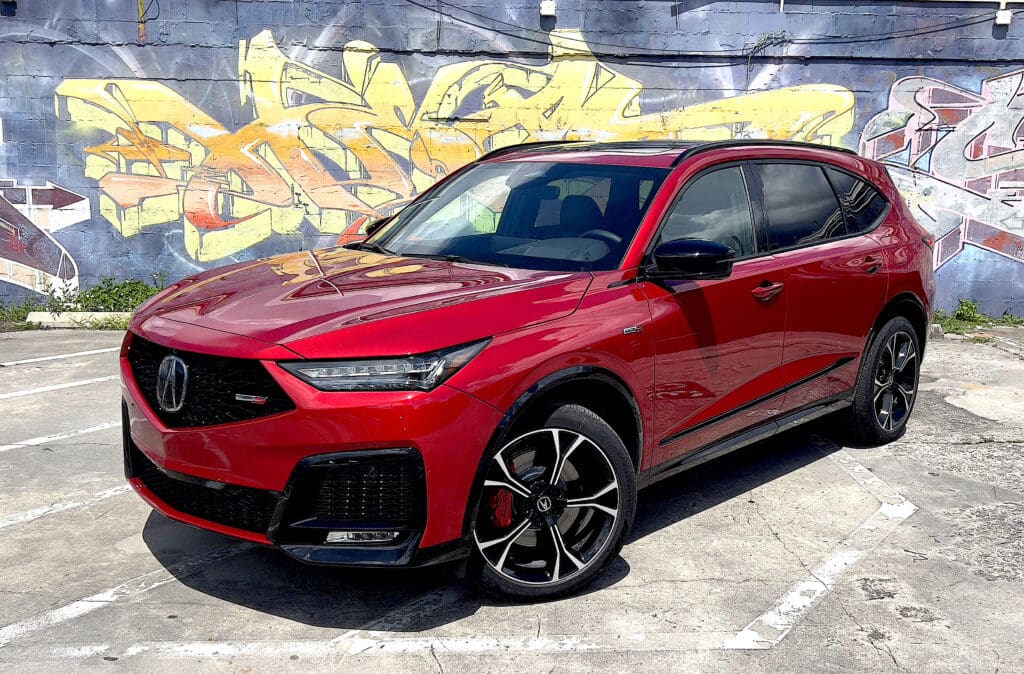
Think of Acura’s MDX as the Victorinox Swiss Army Knife of SUVs. Here’s a three-row family-hauler that’s practical, stylish, beautifully-engineered, and as adept at multi-tasking as Bear Grylls in an Amazonian rain forest. But what separates this able Acura from the plentitude of other mid-size, luxury sport-utes on the market is that lovely, three-letter word. Fun. Show it a twisty blacktop, preferably peppered with a few roundabouts and pinch-tight freeway on-ramps, and the MDX is more fun than Larry the Cable Guy on Comedy Central. Yes, you can get a regular, front-drive MDX with a 290-hp 3.5-liter V6 under that mile-long hood. Pricing for that starts at around $52,000. But why would you when you can opt for the MDX Type S Advance with a whipper-snapper, twin-turbo 3.0-liter V6 packing 355 galloping horseys? Yes, this flagship MDX will set you back a non-trivial $75,850 – or roughly $7,000 over an equally-equipped non-turbo 3.5 A-Spec – but to me it’s worth every extra penny. What also comes standard with the Type S is a quite-brilliant piece of automotive tech that goes by the name SH-AWD. As in Super Handling All-Wheel Drive. What this too-clever, torque-vectoring system does is direct up to 70 per cent of the engine’s 354 torques to the rear wheels. Then throw in adaptive air suspension, steering that’s as precise as Sandra Oh’s scalpel in Grey’s Anatomy, and no fewer than seven driving modes – Sport+ is a blast – and this mighty Acura carves curves like a full-bodied Miata. And the performance and handling feature list goes on. And on. Everything from a swift-shifting 10-speed automatic with paddle shifters, huge Brembo front stoppers, and 21-inch, super-grippy rubberware at each corner. Aluminum pedal to the metal and this latest Type S will slingshot off the line and hit 60 mph in a brisk 5.5 seconds. An boy does that V6 sound sweet at the needle hits the 6,200 rpm red line and the active exhaust goes full throaty. Yet, to me, the beauty of the Acura is its dual, Dr Jekyll and Mr Hyde personality. For those times when you choose not to drive it like you stole it, it can morph into the smooth-riding, whisper-quiet luxury cruiser that it is. The only not-so-impressive features include pretty disappointing fuel economy – think 19 mpg combined – and a fairly jittery ride in anything other than the softest Comfort mode. This current-style, fourth-generation MDX has been around since 2022, but for 2025 Acura gave it a nip, tuck and jab of Botox facelift to keep its appeal high. Unless you drove the previous-generation model you probably won’t know about the universally-hated touchpad interface on the center console that drove most owners nuts. For ’25 it’s thankfully been jettisoned in favor of a conventional 12.3-inch touchscreen on the dash top. To freshen the already easy-on-the-eye exterior, this new Type S gets a slightly meaner-looking front end with lots of glossy-black mesh intakes and slimmer, multi-faceted LED lights. Cool-looking new 21-inch rims too, plus a quartet of big-bore exhausts at the rear. Climb aboard and the classy design continues. I love the body-hugging front sports seats and chunky, padded-leather wheel, plus lots of physical buttons in the center stack. That said, the teeny push-‘n-pull button gearshift is still irritating. Second row riders enjoy stretch-out legroom and terrific seat adjustment, with a wide center armrest that makes the seats feel like captain’s chairs. Yes, there’s a third row, but it’s there only for kids or taking agile friends on short trips to dinner. As a cargo carrier, the MDX does a fine job, swallowing an impressive 71.4 cubic feet of stuff with second and third rows folded, and 39 cubic feet behind the second row. There are UHaul storsage units with less. All this adds up to a truly-impressive offering that’s a blast to drive and a solid alternative to fancy rivals like BMW’s X5, Lexus’ RX, Audi’s Q7, Mercedes’ GLE and the Genesis GV80.